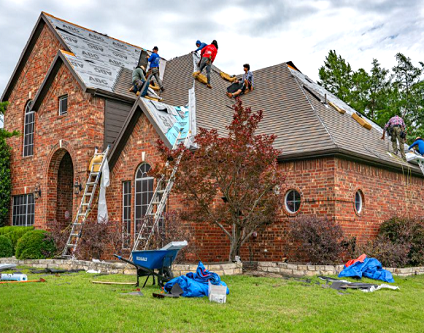
 If you’re planning a roof replacement, it’s easy to focus on shingle color, price, and how fast the crew can finish. The bigger picture usually gets less attention. In a place like Kansas City, where storms, humidity, wind, and temperature swings all affect roof performance, your decisions need to go beyond appearance. A smart roofing plan involves timing, ventilation, material choice, insurance details, and contractor standards that directly shape how long your roof will last.
Kansas City Weather Changes the Roofing Conversation
Roof planning in Kansas City needs a regional mindset. You’re not choosing materials for a mild, stable climate. You’re choosing for hail season, summer heat, freeze-thaw cycles, strong winds, and occasional heavy rain events.
That weather mix puts stress on granule retention, seal strips, flashing joints, and roof penetrations. It also affects the timing of installation. Crews may need to work around sudden weather shifts, and that matters when underlayment or exposed decking is involved.
If you’re evaluating a roofing contractor in Kansas City, pay attention to how they talk about local storm patterns, municipal code expectations, and ventilation strategy for Midwestern homes. A contractor who understands the area should speak specifically about slope conditions, impact resistance, and common leak points seen in local neighborhoods.
Start With the Roof System, Not Just the Shingles
A roof replacement isn’t a simple cosmetic swap. You’re dealing with a full assembly that includes underlayment, flashing, decking, ventilation components, drip edge, and fastening patterns. If one part fails, the entire system can underperform.
A lot of homeowners compare estimates based only on the shingle brand. That leaves out critical details like whether old flashing will be reused or whether the attic ventilation will be corrected. Those choices affect moisture control, energy efficiency, and warranty compliance.
You should ask for a scope of work that lists each system component. If a proposal feels vague, that’s a warning sign. A detailed bid gives you a much clearer view of labor quality, code compliance, and what you’re actually paying for.
Roof Age Doesn’t Tell the Whole Story
Two roofs can be the same age and in completely different condition. One may still have functional life left, while the other is already compromised by poor ventilation, storm damage, or bad installation from day one.
You should look beyond the calendar. Curled shingles, soft decking, exposed nail heads, algae streaking near low-drainage areas, and recurring ceiling stains all point to bigger issues. Granules in gutters can matter too, though they don’t automatically mean total failure.
The most useful inspections connect visible symptoms to probable causes. For example, repeated leaks near chimneys often involve flashing design rather than field shingle wear. An honest assessment helps you avoid replacing a roof too early or waiting so long that moisture damage reaches insulation, framing, or interior finishes.
The Lowest Estimate Can Cost More Later
Roof pricing can vary a lot, and not all low bids are efficient bargains. Some are stripped-down numbers built around shortcuts. That may include fewer tear-off layers, cheaper synthetic underlayment, minimal cleanup, or crews rushing through installation details that most homeowners won’t notice until a problem shows up.
Labor quality matters just as much as material quality. Incorrect nailing, poor valley installation, and weak flashing work can shorten the lifespan of even premium shingles. A cheap estimate can also leave out permit handling or post-job inspection.
When you compare proposals, look for line-item clarity, brand specifications, ventilation notes, warranty terms, and debris disposal. If one quote is dramatically lower, ask exactly what has been excluded. A fair roof price reflects both materials and execution, not just speed.
Ventilation Is One of the Most Overlooked Upgrade Decisions
Homeowners often treat attic ventilation like a side issue. It isn’t. Proper intake and exhaust airflow help regulate attic temperature and moisture levels, which directly affects shingle performance and deck health.
Poor ventilation can trap heat in summer and condensation in colder months. That leads to premature aging, mold risk, warped decking, and insulation problems. It can also interfere with manufacturer warranty requirements if airflow falls outside recommended standards.
You should ask whether your current ventilation is balanced and whether the replacement project includes calculations rather than guesses. Ridge vents, soffit vents, baffles, and attic exhaust all need to work together. A roof that looks great from the street can still fail early if the attic environment underneath it is working against the system every day.
Insurance Claims Need Careful Documentation
After a wind or hail event, many homeowners assume the insurance process will be simple. It rarely is. Claim success often depends on photo evidence, inspection quality, policy language, and whether the damage is functional rather than only cosmetic.
You need documentation that clearly shows impact marks, lifted shingles, compromised seals, flashing displacement, or water intrusion patterns. General photos from the ground usually aren’t enough. Timing matters too, especially if multiple storms have passed since the damage happened.
It helps to understand deductibles, depreciation terms, and whether code-related upgrades are addressed in your policy. Some homeowners learn too late that matching issues or ventilation corrections aren’t automatically covered. A contractor familiar with storm restoration can often help identify relevant roof damage, but you still need to read the insurance paperwork closely.
Material Choice Should Match Your House, Budget, and Risk Level
Not every home needs the same roofing product. Architectural asphalt shingles are still the standard choice for many houses because they balance cost, durability, and appearance. Still, product tiers within the same category can vary in wind ratings, algae resistance, and impact performance.
If your property has a history of storm exposure, upgraded impact-resistant shingles may be worth discussing. If your roof has complex valleys, dormers, or penetrations, installation precision becomes even more important than upgraded branding. Homes with older decking may also need structural review before certain materials are installed.
You should also think about long-term resale optics. Buyers notice a new roof, but they increasingly care about warranty transferability, documented work, and whether premium components were used under the visible surface.
A Good Replacement Plan Includes the Aftermath
The roof installation day gets most of the attention, but what happens after the crew leaves matters just as much. You should know who handles final inspection, magnetic nail sweep, gutter cleanup, warranty registration, and any follow-up concerns.
A strong contractor won’t disappear after collecting payment. They’ll explain workmanship coverage, manufacturer warranty limits, and what maintenance actually helps preserve the roof. They should also tell you what signs to monitor over the next year, especially after major storms.
The best roof replacement decisions come from looking at the house as a full weather-exposure system rather than a single project line in your budget. If you take time to evaluate structure, materials, ventilation, and local conditions together, you’re much more likely to end up with a roof that performs well for years instead of simply looking new for a season.