Key Takeaways
-
Severe tooth pain, facial swelling, uncontrolled bleeding, and loose or knocked-out teeth require prompt attention.
-
A knocked-out permanent tooth should be handled only by the crown, kept moist, and brought to a dentist immediately.
-
Home care may temporarily ease discomfort, but it cannot repair a fracture or treat a dental infection.
-
Difficulty breathing or swallowing, major facial trauma, and possible jaw fractures require emergency medical care.
-
For toothaches, broken teeth, lost crowns, and dental injuries, calling a dentist the same day is the next best step.
A dental emergency can interrupt an ordinary Las Vegas day quickly, whether it starts with a sudden toothache, a chipped tooth during a meal, or an injury while playing sports. Knowing what to do first can limit discomfort and protect the tooth until you can reach an emergency dentist in Las Vegas.
For patients near Spring Valley, Enterprise, and southwest Las Vegas, prompt guidance matters when symptoms are severe or getting worse. Buffalo 215 Dental, led by Dr. Aman Gill, is located at 6530 S Buffalo Dr, Ste 105, Las Vegas, NV 89113. Calling (702) 505-9199 can help you determine the appropriate next step for an urgent dental concern.
Table of Contents
-
What Counts as a Dental Emergency?
-
What to Do in the First Few Minutes
-
How to Handle a Broken or Cracked Tooth
-
What to Do When a Tooth Is Knocked Out
-
Managing Tooth Pain, Bleeding, and Swelling
-
Dentist or Emergency Room?
-
Dental Emergencies in Children
-
Ways to Reduce Future Dental Injuries
What Counts as a Dental Emergency?
Not every dental concern needs an immediate appointment. A small, painless chip may be able to wait briefly, although it should still be examined. Call a dentist the same day when pain is severe or persistent, a tooth is loose, a crack is visible, a filling or crown falls out and causes pain, or swelling develops in the gums, face, or jaw.
Other warning signs include bleeding that does not stop with steady pressure, pus, fever, a bad taste in the mouth, or swelling that is increasing. These symptoms can point to trauma or infection that needs professional evaluation rather than a home remedy.
What to Do in the First Few Minutes
Start by moving away from the source of injury and checking for broader medical concerns. Then take calm, practical steps while arranging dental care:
-
Rinse the mouth gently with clean water.
-
Use clean gauze and apply gentle pressure to the bleeding.
-
Apply a cold compress to the outside of the cheek for swelling.
-
Save broken tooth pieces, a loose crown, or a filling if you can find them.
-
Avoid chewing on the injured side.
-
Call a dental office and clearly describe the injury, pain level, swelling, and bleeding.
Do not use household glue to replace a restoration. Do not place aspirin directly against the gums, because it can irritate soft tissue. Avoid trying to file down a sharp tooth edge at home.
How to Handle a Broken or Cracked Tooth
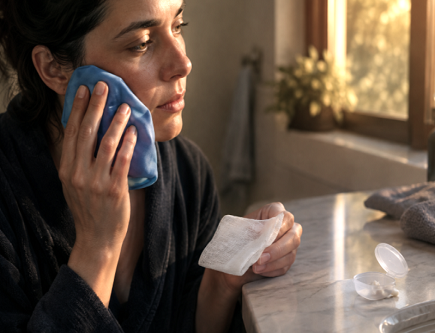
Rinse gently with warm water, save any fragment, and place a cold compress outside the face if there is swelling. Choose soft foods and avoid biting with that tooth until it is examined. Even a minor crack may expose sensitive tissue or allow bacteria to enter the tooth.
A dentist can determine whether the tooth needs smoothing, bonding, a crown, root canal treatment, or another approach. Guidance for a broken or knocked-out tooth also recommends bringing any recovered tooth or fragment to the dental visit. If the tooth has a sharp edge, cover it temporarily with orthodontic wax, if available, rather than risk a cut to the tongue or cheek.
What to Do When a Tooth Is Knocked Out
A knocked-out permanent tooth is time-sensitive. Find it quickly, pick it up only by the crown, and avoid touching the root. If it is dirty, rinse it gently with water, but do not scrub it, wipe it dry, or use soap or chemicals.
-
If safe and possible, gently place the permanent tooth back into its socket.
-
Have the person bite softly on gauze to help hold it in place.
-
If it cannot be placed back, keep it moist in milk or inside the mouth next to the cheek if there is no risk of swallowing it.
-
Seek immediate dental care.
The steps for preserving a knocked-out permanent tooth emphasize careful handling, keeping the tooth moist, and getting to a dental professional as quickly as possible. Do not place a knocked-out baby tooth back into the socket. Instead, contact a dentist for instructions.
Managing Tooth Pain, Bleeding, and Swelling
Temporary Comfort Measures
For a toothache or minor swelling, gently rinse with warm salt water, use a cold compress in short intervals, and keep your head elevated when resting. Over-the-counter pain medicine may be used only as directed on its label and only when it is safe for you based on your health history.
These measures can reduce symptoms while you wait, but they do not fix decay, a fracture, or an abscess. Pain that fades does not necessarily mean the underlying problem is gone. Recurring pain, temperature sensitivity, facial swelling, or biting pain should be evaluated.
Dentist or Emergency Room?
A dentist is usually the best first call for severe toothaches, cracked or broken teeth, loose teeth, knocked-out teeth, lost fillings or crowns, and localized gum swelling. Dental offices have the equipment and training to diagnose and treat dental conditions.
Go to an emergency department or call emergency services for difficulty breathing or swallowing, uncontrolled bleeding, loss of consciousness, major facial trauma, or a suspected broken jaw. If your teeth no longer meet normally after an injury, or the jaw cannot move normally, seek urgent medical evaluation.
Dental Emergencies in Children
Falls, sports, and playground accidents can damage a child’s teeth and soft tissues. Keep the child calm, check for cuts to the lips, tongue, and gums, and save any tooth pieces. A knocked-out permanent tooth needs urgent dental attention, while a knocked-out baby tooth should not be reinserted. Seek medical care for a head injury, heavy bleeding, or breathing concerns.
Ways to Reduce Future Dental Injuries
-
Wear a properly fitted mouthguard for contact sports and activities with a fall risk.
-
Do not use teeth to open packaging, bottles, or other objects.
-
Avoid chewing ice, hard candy, pens, and similar hard items.
-
Attend regular dental visits so worn restorations and weak teeth can be addressed early.
-
Keep gauze, a cold pack, and a small clean container in a home or vehicle first-aid kit.
Final Thoughts
Dental emergencies can be stressful, but fast, informed action can make a meaningful difference. Protect the area, avoid unsafe home repairs, keep a knocked-out permanent tooth moist, and call a dentist the same day when pain, swelling, trauma, or bleeding is involved. For urgent concerns in southwest Las Vegas, contact Buffalo 215 Dental at (702) 505-9199.