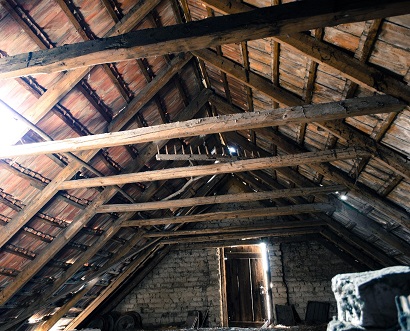
 Finding bats in an attic can make homeowners want to solve the problem as quickly as possible. The most obvious solution may seem to be finding the opening and sealing it.
In practice, bat removal is more complicated than that.
Bats may use more than one entry point, return to the same roost repeatedly, and hide in spaces that are difficult to inspect. Sealing the wrong opening at the wrong time can trap bats inside the attic or force them into other parts of the house.
A proper exclusion process focuses on understanding how bats are entering, where they are roosting, and how to let them leave safely before the structure is permanently sealed.
Why Finding the Entry Point Matters
Bats often enter homes through small gaps around the roofline.
Common access points include:
* Gaps around soffits and fascia
* Roof intersections
* Attic vents
* Chimney flashing
* Loose siding
* Openings around roof trim
* Gaps beneath damaged shingles
* Cracks around older building materials
Some openings may be obvious, while others can be difficult to see from the ground.
Homeowners may notice bats leaving from one location at dusk and assume that is the only entrance. However, a structure can have several gaps that bats may use.
This is why a full inspection is usually more useful than focusing on one visible hole.
Bats Need a Way to Leave
Bat exclusion is different from simply closing an opening.
The goal is generally to allow bats to exit their roost while preventing them from getting back inside.
This often requires identifying the openings currently being used and installing exclusion devices or other methods that allow bats to leave.
Once professionals are confident that the bats are no longer inside, the remaining gaps can be permanently sealed.
If an opening is closed while bats are still in the attic, the animals may become trapped.
That can create several new problems instead of solving the original one.
Improper Sealing Can Push Bats Into Living Areas
Bats trapped inside an attic will naturally search for another way out.
Instead of leaving through the exterior of the home, they may move deeper into wall cavities, ceilings, hallways, bedrooms, or other interior areas.
Small openings around attic doors, utility lines, vents, and wall spaces may provide access into occupied parts of the house.
This is one reason exclusion should be planned carefully rather than handled as a quick repair project.
A homeowner dealing with bat exclusion attic Michigan may need a structured process that includes inspection, identification of active openings, proper exclusion, and final repairs after the bats have left.
The same general principle applies anywhere bats are using a building as a roost.
Timing Can Be Important
The timing of exclusion can also affect whether the process is successful.
During certain parts of the year, young bats may still be unable to fly. If adult bats are excluded while young bats remain inside, the young bats can become trapped in the attic.
This can create additional wildlife, odor, and cleanup problems.
Local wildlife regulations may also affect when certain bat removal methods can be used.
For these reasons, homeowners should avoid assuming that every bat problem can be handled in exactly the same way throughout the year.
A wildlife professional familiar with local bat behavior and regulations can help determine the proper timing.
Inspect More Than the Attic
Although the bats may be roosting in the attic, the inspection should usually include the exterior of the home as well.
The roofline is one of the most important areas to examine.
Look for:
* Separated soffit panels
* Damaged vents
* Loose flashing
* Gaps between roofing materials
* Openings where additions meet the original structure
* Deteriorated wood
* Cracks around siding
* Missing screens
Older homes may require additional attention because building materials can shift, crack, or deteriorate over time.
Even a small opening can become an access point.
Observing the house around dusk can sometimes help identify active areas. Homeowners may see bats repeatedly leaving from the same section of the roof.
Observation should always be done from a safe distance.
Avoid Direct Contact
Homeowners should not handle bats with bare hands.
Although most bats will avoid people, they are still wild animals. Bites and scratches can sometimes be small and difficult to notice.
Children and pets should also be kept away from bats found inside or around the home.
If a bat is found in a living area and there is any possibility that a person or pet had direct contact with it, homeowners should contact the appropriate healthcare, veterinary, animal control, or public health authority for guidance.
The safest approach is to avoid unnecessary contact entirely.
Sealing Secondary Gaps Is Part of the Process
Once bats have been successfully excluded, the next step is preventing them from returning.
That means addressing more than the main opening.
Other gaps around the home should also be repaired or sealed, including openings around vents, soffits, roof edges, siding, flashing, and utility penetrations.
Leaving secondary openings behind may allow bats to return later.
A thorough exclusion process therefore combines removal with prevention.
Why a Structured Approach Works Better
Attic bat problems are rarely solved by simply finding one hole and closing it.
Successful exclusion usually requires several steps.
Homeowners need to identify where bats are entering, determine whether the openings are actively being used, understand when the bats can safely leave, and make sure no animals remain inside before permanent repairs are completed.
Skipping these steps can trap bats, move them into living areas, or leave other openings available for future activity.
A careful inspection and properly timed exclusion process provides a safer and more effective way to address bats in the attic while reducing the chance that the same problem will return.