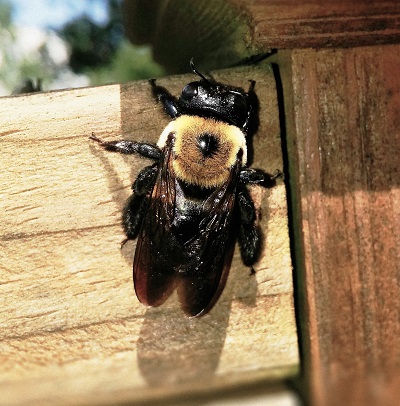
Carpenter bees are common around homes with exposed wood, especially during warmer months. Their large size and loud buzzing can make them seem aggressive, but their behavior is often less threatening than their appearance suggests.
The bigger concern for many homeowners is what happens when carpenter bees repeatedly nest in decks, eaves, fences, pergolas, and other wooden structures. Over time, repeated tunneling can damage wood and create conditions that attract more bees in future seasons.
Knowing what to look for can help homeowners address the problem before it becomes more serious.
Why Carpenter Bees Are Attracted to Wood
Unlike honey bees, carpenter bees do not build large social hives.
Instead, females create individual nesting tunnels inside wood. They often prefer exposed, weathered, or unfinished surfaces that are easier to enter.
Common nesting locations include:
* Deck railings
* Roof eaves
* Fascia boards
* Wooden fences
* Pergolas
* Sheds
* Porch structures
* Outdoor furniture
* Window trim
* Other exposed wooden surfaces
The female bee typically creates an entrance hole and then tunnels farther into the wood to create areas where eggs can be laid.
A single tunnel may not cause major structural damage, but problems can increase when the same wood is used repeatedly over several years.
What Carpenter Bee Damage Looks Like
One of the easiest signs to recognize is a nearly round hole in a wooden surface.
These entrance holes are often clean and smooth, making them look almost as if they were drilled.
Homeowners may also notice sawdust-like material beneath the opening. This debris is created as the bee removes wood while building its tunnel.
Other common signs include:
* Bees repeatedly hovering near the same section of wood
* Multiple round holes in nearby areas
* Wood staining around older nesting holes
* Increased activity around decks, fences, or rooflines
* Birds or other animals showing interest in areas where bees are nesting
Repeated activity in the same location is worth paying attention to, especially when several holes are visible.
They Often Look More Aggressive Than They Are
Carpenter bees can appear intimidating because of their size and the way they sometimes hover close to people.
Male carpenter bees are especially noticeable because they may fly directly toward anyone approaching a nesting area. This behavior is usually territorial rather than an attempt to sting.
Male carpenter bees cannot sting.
Females can sting, but they generally do so only when they are handled or feel directly threatened.
Homeowners asking are carpenter bees dangerous should consider both sides of the issue. Direct risk to people is generally limited when the bees are left alone, but repeated nesting can become a property concern if tunnels continue to develop in wooden structures.
Why Repeated Nesting Can Become a Problem
Carpenter bees may return to suitable nesting areas year after year.
They can also reuse or expand older tunnels.
As the number of tunnels increases, wood may gradually become weakened. The risk depends on factors such as how many bees are nesting there, how long the activity has continued, and whether the same wooden area is being used repeatedly.
Damage is often more noticeable on structures with large amounts of untreated or weathered wood.
In some cases, old carpenter bee tunnels may also attract woodpeckers searching for bee larvae. Their activity can enlarge existing holes and create additional surface damage.
This means the visible entrance hole may only be one part of the problem.
Where Homeowners Should Inspect
If carpenter bees are regularly flying around a property, inspect exposed wooden areas carefully.
Pay particular attention to the underside of decks, railings, roof overhangs, pergolas, wooden siding, fences, sheds, and outdoor furniture.
Areas protected from heavy rain may be especially attractive because they provide a sheltered nesting location.
Look for both new holes and older openings. A weathered hole may indicate that the same area has been used in previous seasons.
Repeated bee activity near one particular board or section of a structure can also help identify an active nesting site.
Avoid Handling Carpenter Bees Directly
Even though carpenter bees are generally not highly aggressive, homeowners should avoid catching or handling them.
Females are capable of stinging when threatened.
Children and pets should also be kept away from active nesting areas when possible, especially when bees are frequently entering and leaving the wood.
Trying to block an active hole without addressing the bees inside may not solve the problem either. Bees may create another exit or continue using nearby wood.
A more complete approach considers both the current nesting activity and how to make the area less attractive in the future.
Protecting Wood Can Help Prevent Future Activity
One of the most useful preventive steps is maintaining exposed wood.
Carpenter bees often prefer untreated or unfinished surfaces. Painting, staining, sealing, or otherwise protecting wood may make it less appealing for nesting.
Homeowners should also repair damaged boards and address older nesting holes once they are certain the activity has ended.
Exterior wood should be inspected periodically, especially in areas where carpenter bees have appeared before.
This is particularly important for decks, pergolas, eaves, and other structures that remain exposed to weather throughout the year.
When Professional Help May Be Useful
A small amount of carpenter bee activity may be manageable, but repeated nesting across several parts of a property can become difficult to control.
Professional pest services can help identify active nesting areas, determine the extent of the problem, and recommend treatment or prevention methods based on the condition of the structure.
This can be useful when nests are located high on the house, when numerous holes are present, or when the bees continue returning despite repairs.
Pay Attention to Both the Bees and the Wood
Carpenter bees are not usually looking for conflict with people.
Their large size and hovering behavior can make them seem more aggressive than they generally are. For homeowners, the more important issue is often the effect repeated nesting can have on exposed wooden structures.
Round holes, sawdust-like debris, and regular bee activity around decks, eaves, fences, pergolas, or outdoor furniture are all signs worth investigating.
Addressing the activity early and protecting vulnerable wood can help prevent a minor nesting problem from turning into repeated damage over time.