Depth is the figure printed on the box of every elevated garden bed and the one gardeners quote to each other. Volume is what plants actually experience, and the two diverge sharply once a bed gets narrow. A twelve-inch-deep bed two feet wide holds half the soil of the same depth at four feet wide, and roots notice the difference long before the gardener does.
Volume governs the two things that decide whether a bed performs: how much water it can hold between irrigations, and how much thermal mass it has to buffer temperature swings. Both scale with total soil, not with the number on the depth specification.
Root Depth Is a Species Question
Lettuce, radishes, and most herbs work entirely within the top six inches and will produce well in a shallow bed. Tomatoes, squash, and brassicas send roots considerably deeper when allowed to, and restricting them shows up as earlier wilting in hot weather rather than as visibly stunted plants.
Carrots and other taproots are the clearest case because the harvest is the root itself. A bed shallower than the mature root length produces forked or stubby crops, which is a geometry problem rather than a soil fertility problem and cannot be fertilized away.
Soil in a container also behaves differently from soil in the ground at the same depth. There is no capillary connection to the water table below, so the entire reservoir is whatever was filled in, and roots reaching the base find a hard boundary rather than gradually denser subsoil. That boundary is why the volume figure keeps mattering.
The useful approach is to match bed depth to the deepest crop in the rotation rather than to the average. A bed sized for its most demanding occupant can grow anything in the sequence, while one sized for lettuce quietly limits the rotation for as long as it exists.
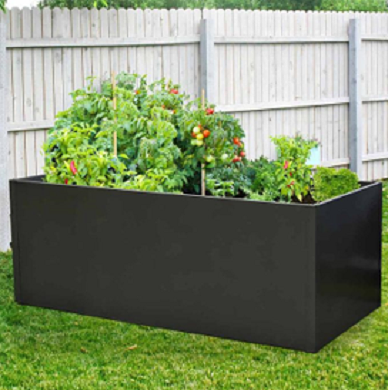
Metal Heats and Cools Faster Than Wood
Steel in an elevated garden bed has low thermal mass and high conductivity, so a metal-sided bed warms faster in spring than a timber one and gives that heat back faster at night. In a cool climate the spring advantage is real and useful, letting seedlings go in a week or two earlier than they otherwise could.
In hot weather the same property works against the gardener. A south or west-facing steel wall in full sun can raise soil temperature at the perimeter well above the center, which drives moisture out of the edge zone and stresses whatever is planted there. Planting the heat-sensitive crops toward the middle is a simple fix that costs nothing.
The depth of the bed moderates all of this. Soil is a poor conductor, so the effect fades quickly with distance from the wall, and a deeper bed has proportionally less of its volume within the affected zone. This is another place where a rectangular metal raised garden bed behaves differently depending on its proportions rather than its material.
Coating choice determines how long the steel lasts. Galvanizing protects by sacrificing zinc, and the coating weight rather than the steel thickness sets the service life. Cut edges and fastener holes are where it starts, which is why a bed with rolled or capped edges tends to outlast one with raw cut edges in the same soil.
Drainage Below the Bed Decides Everything Above It
An open-bottomed elevated garden bed sitting on soil drains through to that soil, which means the native ground is part of the system whether the gardener intends it or not. Clay subsoil under a bed will hold water at the interface, and a bed that appears to drain freely in spring can become waterlogged at the base after sustained rain.
Rodent access is worth considering at the same time, since the bottom is the only moment it can be addressed. A layer of hardware cloth stapled across the base before filling stops voles and gophers entering from below, and it is a ten-minute job that is effectively impossible once the bed holds a cubic yard of soil.
Breaking that interface is straightforward. Loosening the native soil before the bed goes down, or laying a few inches of coarse material at the boundary, lets water move through instead of perching. The work takes an hour and cannot be done later without emptying the bed.
Beds placed on patios or decks need deliberate drainage because there is nowhere for water to go. Drilled holes plus a gap beneath the frame work, provided the water that exits has somewhere acceptable to land. A garden planter on a wooden deck without that gap will rot the decking under it.
Filling From the Bottom Up Saves Soil
Purchased soil is the largest cost in most elevated garden bed projects, and the volume needed surprises people the first time. Filling the lower portion with coarse organic material and reserving the quality mix for the upper layer where roots are densest cuts that cost substantially without affecting performance for most crops.
Woody material at the base breaks down over several seasons, releasing nutrients and improving structure as it goes. The tradeoff is settling: a bed filled this way will drop noticeably in the first year and needs topping up, which is expected rather than a sign of failure.
Irrigation design follows from volume rather than from area. A deep bed holds enough water that deep, infrequent watering works well and encourages roots downward; a shallow one needs frequent light watering and will punish a missed day in hot weather. Drip line spacing should reflect which of those two situations the bed actually is.
Mix composition matters more than brand. A blend of compost, topsoil, and a mineral component for structure outperforms pure compost, which compacts and holds too much water. Anyone building more than one bed will save money mixing their own rather than buying bagged product, and a vegetable garden box of any size benefits from the same recipe.
Finally, a planter box of any construction is a closed system that loses organic matter every season to decomposition and harvest. Topping with a few inches of compost every season is what keeps the soil structure that was built in year one, and skipping it is the usual reason that beds which performed beautifully at the outset become disappointing somewhere around the fourth season. TMG Industrial lists bed dimensions and panel gauge together, which lets a gardener work out soil volume and expected service life from the same page instead of guessing at one of them.