Key Takeaways
- Basement flooding often results from several issues happening at once, not one isolated failure.
- Gutters, downspouts, grading, foundation drainage, and sump equipment should work together.
- A sump pump should be tested before major storms, not after water has already entered the basement.
- Battery backup, alarms, and safe emergency lighting can help when storms cause outages.
- Belongings stored off the floor are easier to protect and move if water enters the space.
Table of Contents
- Why Basements Flood During Heavy Rain in Northbrook
- Inspect the Outside of Your Northbrook Home
- Check the Sump Pump System
- Prepare for a Power Outage
- Protect Belongings and Appliances
- Look for Foundation Leaks and Sewer Backup Risks
- Use a Before-Storm Checklist for Northbrook Weather
- Common Questions
- Conclusion
Northbrook homeowners know that a fast-moving Illinois thunderstorm can turn a small drainage issue into a stressful basement problem. Preparing before rain begins gives water a clearer path away from the house and gives you time to identify weak points in the system. If your setup needs an upgrade, Northbrook sump pump installation can be part of a broader plan to manage groundwater around a below-grade space.
Every property is different, but the basics are consistent: control roof runoff, keep soil sloping away from the foundation, test the sump pump, protect important belongings, and have a plan for power loss. These steps are especially useful in established Northbrook neighborhoods, where mature trees, settled landscaping, window wells, and older drainage layouts can all affect where water travels.
Why Basements Flood During Heavy Rain in Northbrook
Water can reach a Northbrook basement through roof runoff, saturated soil, window wells, foundation openings, floor drains, or a sewer backup. Local stormwater systems handle runoff from streets, yards, swales, and storm sewers, but intense or prolonged rainfall can still create localized flooding. The Village’s guidance on managing flooding on or near your property also distinguishes active basement flooding from sewer backup, which is important because the response and repairs may be different.
A functioning sump pump is valuable, but it cannot correct every problem. If downspouts release roof water beside the house or a window well is full of leaves, the amount of water reaching the foundation may exceed what one pump can manage.
Inspect the Outside of Your Northbrook Home
Clean Gutters and Direct Downspouts Away
Remove leaves, twigs, roof grit, and other debris so gutters can carry rainwater to the downspouts. Then check where the downspouts discharge. Water should be directed onto stable ground that slopes away from the foundation, rather than toward a basement wall, front walk, or neighboring property.
Check the Grade Near the Foundation
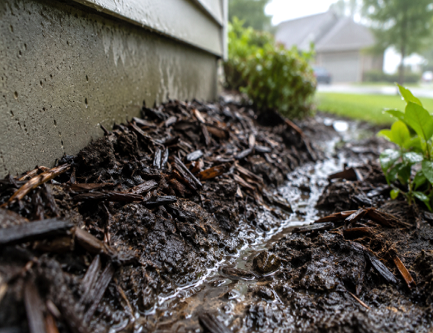
Walk around the house after a normal rain. Puddles beside the foundation, washed-out mulch, damp soil that lingers, or channels cut through landscaping can signal poor drainage. Fill settled areas carefully and maintain a gradual slope away from the home. Keep mulch and soil from covering siding, vents, or window frames.
Check the Sump Pump System
Test the primary pump before the forecast calls for heavy rain. Clear loose debris from the pit, make sure the pump is upright, and slowly add water until the float activates it. Confirm that water leaves through the discharge line and does not collect beside the foundation.
- Inspect the discharge line for disconnections, crushing, clogs, or damage.
- Make sure the outdoor outlet is not buried by soil, ice, or dense landscaping.
- Listen for grinding, repeated short cycling, weak discharge, or unusually long run times.
- Keep the sump pit accessible so it can be checked quickly during a storm.
Prepare for a Power Outage
Heavy rain often arrives with wind and lightning, so a power outage can happen at the exact time the sump pump is needed most. Consider whether a battery backup pump, a properly sized backup power option, or a high-water alarm makes sense for your home. Test backup equipment ahead of storm season, and keep flashlights, charged power banks, and spare batteries in an easy-to-reach location.
Never run a fuel-burning generator inside the house, garage, basement, or another enclosed space. If electrical equipment is wet or standing water is near outlets, cords, or appliances, stay out of the area until it is safe to assess.
Protect Belongings and Appliances
Move irreplaceable photographs, paper records, electronics, and family keepsakes to an upper floor when possible. For items that must remain in the basement, use sturdy plastic bins on shelving or raised platforms. Avoid storing cardboard boxes directly on the floor or tightly against exterior walls.
Leave clear paths to the sump pit, floor drain, electrical panel, furnace, and water heater. An organized basement is safer to inspect and makes it easier to respond if water starts entering during a storm.
Look for Foundation Leaks and Sewer Backup Risks
Check basement walls and floors for fresh damp marks, peeling paint, white mineral deposits, musty odors, or new cracks. Also inspect window wells. Remove leaves and soil, make sure covers fit securely, and confirm that any well drainage is not blocked.
Groundwater seepage and sewer backup are not the same issue. A sump pump handles groundwater collected by the drainage system, while sewer backup may require a different protective measure and professional evaluation. Illinois guidance notes that saturated ground can contribute to basement flooding and that heavy rain can also contribute to sewer backups through drain lines.
Use a Before-Storm Checklist for Northbrook Weather
One Week Before a Major Storm
- Clean gutters and inspect each downspout outlet.
- Test the sump pump, backup system, and alarm.
- Clear window wells and check for visible foundation moisture.
- Raise stored belongings and charge emergency devices.
On the Day of the Storm
- Keep discharge lines clear and basement walkways open.
- Bring in loose yard items that could block drainage paths.
- Monitor local weather alerts and avoid driving through flooded streets.
- Watch for water near electrical equipment without entering an unsafe area.
Common Questions
How often should a sump pump be tested?
Test it before periods of heavy rain and several times throughout the year. Homes with prior water problems or frequent pump activity may benefit from more frequent checks.
Can clean gutters prevent basement flooding?
They can reduce one major source of water near the foundation, but they are only one part of the solution. Downspouts, grading, window wells, foundation drainage, and the sump system all matter.
When should a homeowner call for help?
Seek qualified help when the pump runs without removing water, water enters through walls or floors, a discharge line fails, sewage backs up, cracks are growing, or electrical equipment has been exposed to water. Safety should take priority over cleanup.
Conclusion
A storm-ready basement begins with routine attention before the clouds arrive. By managing roof runoff, checking drainage around the foundation, testing the sump pump, preparing for a possible outage, and storing valuables above the floor, Northbrook homeowners can reduce avoidable water risks and respond more confidently when heavy Illinois rain moves through.