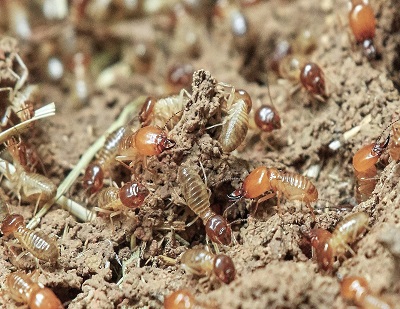
 Termites are often associated with obvious wood damage, mud tubes, or visible swarms, but a property can become more attractive to termites long before any of those warning signs appear.
Many of the conditions that increase termite risk are surprisingly ordinary. Moisture around the foundation, stacked firewood, dense mulch, or a slow irrigation leak may not seem serious on their own, yet together they can create an environment that termites are more likely to use.
The challenge is that these conditions can exist quietly for months or even years without visible evidence of termite activity.
Understanding the less obvious risk factors around a home can help property owners reduce the chances of future problems.
Excess Moisture Near the Foundation
Moisture is one of the most important conditions to watch around a home.
Termites need moisture to survive, and damp soil near a foundation can make the area more favorable to them. Poor drainage, clogged gutters, leaking downspouts, plumbing leaks, or irrigation systems that regularly saturate the soil can all contribute.
Even small amounts of ongoing moisture may matter if the same area stays damp for long periods.
Homeowners should check whether rainwater drains away from the structure rather than collecting beside it. Downspouts should direct water away from the foundation, and low areas in the yard should not remain consistently wet.
Leaking Irrigation Systems
Sprinklers and irrigation systems are easy to overlook because much of the water is distributed outside.
However, a damaged sprinkler head, leaking irrigation line, or poorly positioned system can keep soil near the home wetter than necessary.
Watch for unusually green patches of grass, soft soil, standing water, or areas that remain wet even during dry weather.
Adjusting sprinkler heads so they do not repeatedly spray against siding or the foundation can also help reduce unnecessary moisture around the structure.
Firewood Stored Too Close to the House
Firewood can create a convenient source of cellulose for termites.
When logs are stacked directly against the home or placed on bare soil near the foundation, they can provide both food and shelter.
A better approach is to store firewood away from the house and keep it raised above ground level when possible.
The same principle applies to scrap lumber, old fence boards, cardboard, and other wood-based materials stored outdoors.
When reviewing 5 ways you could be attracting termites unknowingly, homeowners may be surprised by how many common landscaping and storage habits can quietly increase termite-friendly conditions.
Buried Wood Can Be Easy to Miss
One of the less obvious risks is wood that has been left underground.
Old tree roots, construction debris, buried boards, fence posts, and landscape timbers can remain in the soil long after a project is finished.
Because this wood is out of sight, homeowners may not realize it is there.
If termites begin feeding on buried wood, they may remain unnoticed until they move closer to structural materials.
When possible, old wood debris should be removed from soil near the foundation rather than simply covered with dirt.
Dense Mulch Around the Home
Mulch is useful for landscaping, moisture retention, and weed control, but too much mulch directly against the house can create conditions that favor termites.
A thick layer of mulch can hold moisture in the soil and make it harder to see activity near the foundation.
This does not mean homeowners need to eliminate mulch entirely.
Instead, avoid piling mulch directly against siding, foundation vents, or wooden structural materials. Keeping the layer reasonably shallow and maintaining some visible space near the foundation can make inspection easier.
Wood-to-Soil Contact
Any untreated wood that touches the ground can create a potential pathway for termites.
Deck supports, fence posts, wooden steps, siding, door frames, and other structural components should be checked for direct soil contact.
When wood remains damp and is also in contact with soil, the risk can increase.
If possible, maintain separation between soil and wooden building materials and repair areas where landscaping has gradually built up around the structure.
Untreated or Weathered Structural Materials
Exterior wood can become more vulnerable over time, especially when it is exposed to rain, humidity, or poor ventilation.
Damaged siding, deteriorating trim, untreated posts, and aging deck components may absorb moisture more easily.
Routine maintenance can help reduce this risk.
Homeowners should repair damaged exterior wood, address peeling finishes, and replace severely deteriorated materials when needed.
Check Crawl Spaces and Other Hidden Areas
Some termite-friendly conditions may develop in areas homeowners rarely inspect.
Crawl spaces, utility areas, garages, and spaces beneath decks may have moisture issues or wood debris that is easy to miss.
Check for plumbing leaks, condensation, damp insulation, standing water, or wooden materials resting directly on soil.
Good airflow and proper drainage can also make these areas less hospitable to moisture-related pests.
Keep Gutters and Downspouts Working Properly
A clogged gutter can send water directly down the side of a house.
Over time, repeated overflow may keep soil near the foundation unusually wet.
Cleaning gutters regularly and making sure downspouts direct water away from the home are simple maintenance steps that can support termite prevention.
Homeowners should also check whether downspout extensions have shifted or become disconnected after storms or yard work.
Make Routine Inspections Part of Home Maintenance
Termite prevention is easier when inspections happen before there is obvious damage.
Walk around the exterior of the home periodically and look for moisture problems, wood-to-soil contact, damaged trim, stacked lumber, or areas where landscaping hides the foundation.
Inside, pay attention to changes such as soft wood, blistering paint, unexplained wall damage, or flooring that begins to feel uneven.
These signs do not always indicate termites, but they are worth investigating.
Reduce Conditions Before They Become Problems
A home does not have to show visible termite activity to have conditions that increase risk.
Excess moisture, leaking irrigation, buried wood, dense mulch, untreated materials, and poorly placed firewood can all exist quietly around a property.
The good news is that many of these conditions are manageable.
Improving drainage, fixing leaks, keeping wood away from the foundation, maintaining exterior materials, and checking hidden areas regularly can make the property less favorable to termites.
Consistent maintenance cannot guarantee that termites will never appear, but it can remove many of the everyday conditions that make it easier for them to become established.