Key Takeaways
- One pair of shoes does not necessarily suit every part of the day.
- A shoe rotation can help you match footwear to work, walking, exercise, and time at home.
- Fit is just as important as cushioning, arch shape, heel design, or brand.
- A roomy toe box, secure heel, stable sole, and comfortable midsole are useful starting points.
- Insoles may improve comfort in the right shoe, but they cannot fix a poor fit or worn-out sole.
- Persistent, severe, or worsening foot pain deserves professional attention.
Supportive footwear is not about finding one supposedly perfect shoe. It is about choosing pairs that suit your feet, daily routine, work surface, and preferred activities. Reading comfort-focused footwear reviews can be a useful starting point, but your own fit and comfort should guide the final decision. A highly rated shoe can still be a poor choice if it pinches your toes, slips at the heel, or feels unstable during the activities you do most often.
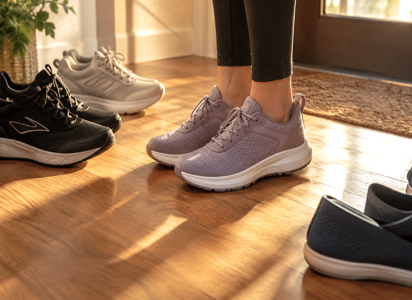
Someone who stands through a retail shift, walks a dog each morning, trains at the gym, and spends evenings on hard floors may benefit from different footwear for each setting. A practical rotation can reduce the temptation to wear one tired pair for everything. It can also make it easier to notice when a particular shoe no longer feels comfortable or no longer suits a specific task.
Why a Shoe Rotation May Help
Wearing the same pair for every task can mean repeating the same pressure points, movement pattern, and level of cushioning from morning to night. Rotating shoes lets you choose a more suitable option for the activity ahead. For example, a stable work shoe, a dedicated walking shoe, and supportive house footwear can each serve a different purpose. Rotation is also practical for moisture management and wear. Shoes that are repeatedly soaked with sweat or exposed to wet conditions may be less pleasant to wear the next day. Allowing a pair of shoes to air out can be especially useful when you exercise regularly or work in warm conditions. Still, changing shoes is not a medical treatment and does not replace rehabilitation, activity changes, or care recommended by a clinician.
Match Footwear to Daily Activities
The best choice depends on how long you will be on your feet, how you move, and the surfaces beneath you. A commuter may prioritize comfort and versatility, while a restaurant worker may need reliable traction. A runner needs a shoe designed for repetitive forward movement, while someone doing strength training may prefer a lower, steadier platform. Consider the full day rather than only the main activity, including stairs, uneven sidewalks, wet entryways, and the time spent standing still.
- Work: Prioritize stability, grip, enough toe room, and comfort over a long shift.
- Walking: Look for a secure heel, a smooth stride, and cushioning that does not feel unsteady.
- Exercise: Use footwear made for the activity rather than relying on casual sneakers.
- Travel: Choose lightweight shoes with adjustable closure and room for normal foot swelling.
- Home: Consider structured slippers or sandals if hard floors or barefoot walking aggravate symptoms.
Footwear Features Worth Checking
You do not need advanced shoe knowledge to assess the basics. Start with the toe box. Your toes should have space to spread and should not press into the front or sides. The heel counter, or rear section around the heel, should hold your foot securely without rubbing. A lace, strap, buckle, or other adjustable closure can help keep the foot from sliding forward inside the shoe. Check whether the midsole feels cushioned but controlled. Extremely soft footwear can feel pleasant at first, yet may feel unstable for some people. The shoe should generally bend around the forefoot rather than fold easily through the middle of the arch. Good outsole traction also matters on wet, smooth, or workplace floors. It is also worth comparing the shape of the shoe with the shape of your foot; a narrow or pointed toe box may be uncomfortable for a wider forefoot, even when the length seems correct. For people researching heel discomfort, plantar fasciitis is commonly used to describe pain involving the plantar fascia, a band of tissue along the bottom of the foot. Footwear may improve day-to-day comfort, but it cannot confirm the cause of pain or guarantee a cure.
Choosing Shoes for Long Work Shifts
Long shifts require more than soft cushioning. A useful work shoe should feel stable when you turn, walk quickly, climb stairs, or stand still. It should also have enough interior volume for the socks you normally wear and, if needed, an insert. If your job has footwear rules, look for the most comfortable option that still meets required safety, slip-resistance, or coverage standards.
Work Shoe Checklist
- A sole that does not twist excessively from side to side.
- A heel that remains secure during walking.
- A toe box that stays comfortable later in the shift.
- A slip-resistant outsole when the work environment requires it.
- Breathable materials that help manage heat and moisture.
Selecting Shoes for Walking and Exercise
A shoe that feels fine for a quick errand may not be comfortable for a long walk or workout. For regular pavement walking, look for steady cushioning and a fit that prevents heel slip. For gym sessions, match the shoe to the activity. Running, court sports, lifting, and hiking place different demands on footwear. Try shoes later in the day when feet may be slightly larger, and wear the socks you typically use. Measure and try on both feet, since one foot may be larger than the other, and base the fit on the larger foot. If you are moving to a different style, make the change gradually instead of suddenly switching from a highly cushioned shoe to a very minimal option. Stop the activity and reassess if the pain becomes sharp or severe, or changes the way you walk.
Why Home Footwear Should Not Be Ignored
Many people give careful attention to outdoor shoes but spend hours barefoot or in flattened slippers at home. If hard floors make your feet feel worse, supportive indoor footwear may be worthwhile. Choose house shoes with a secure footbed and a sole substantial enough for brief outdoor trips when needed. The right indoor option should stay on your foot without forcing you to curl your toes or shuffle as you walk.
Avoid loose slides that make your toes constantly grip the shoe to hold it in place. Replace slippers or sandals when the footbed becomes uneven, compressed, or worn smooth.
A Simple In-Store Fit Test
- Try on both shoes while wearing your usual socks.
- Stand and check that the longest toe is not touching the front.
- Walk for several minutes, ideally on more than one surface.
- Notice whether the heel slips, rubs, or feels unstable.
- Press around the toe area to identify tight spots.
- Gently bend the shoe to see whether it flexes near the forefoot.
- Do not assume a break-in period will solve obvious discomfort.
If you use an orthotic or a regular insole, bring it when trying on shoes. A shoe that feels comfortable with its original footbed may fit very differently once an insert takes up interior space.
When Insoles May Help
An insole can improve comfort when the shoe already fits well and has enough depth. Check whether the original footbed can be removed, make sure the replacement lies flat, and avoid stacking inserts unless a professional advises it. Introduce firmer inserts for short periods rather than wearing them all day immediately. An insert should support or cushion the foot without creating new pressure, crowding the toes, or causing the heel to lift out of the shoe.
Common Footwear Mistakes
- Buying primarily for appearance.
- Assuming the softest shoe is automatically the most supportive.
- Choosing a size without trying on both shoes.
- Keeping worn shoes because the upper still looks good.
- Using running shoes for jobs that require more grip or structure.
- Ignoring discomfort because the shoe felt good for the first few minutes.
Another common mistake is replacing discomfort with a tighter fit. If a shoe feels secure only when it compresses the toes or creates rubbing, a different width, shape, closure system, or model may be a better solution.
When to Seek Professional Advice
Footwear changes are reasonable to try for mild discomfort, but they are not a substitute for diagnosis. Consider medical guidance if pain lasts several weeks, follows an injury, causes limping, becomes severe, or occurs with swelling, redness, numbness, weakness, or fever. The American Academy of Orthopedic Surgeons notes that heel pain can have multiple causes, which is one reason persistent symptoms should not be self-diagnosed.
A podiatrist, physician, or physical therapist can evaluate symptoms, footwear, and walking mechanics. Bring the shoes you wear most often, along with any inserts, so the clinician can better understand your usual setup. The goal is not to find a miracle shoe. It is to build a comfortable, realistic plan that fits your feet and your life.
Conclusion
Supportive footwear starts with understanding how your feet feel and what your daily routine requires. Rather than relying on one pair for every activity, consider building a practical shoe rotation that includes options for work, walking, exercise, and time at home. Pay attention to fit, toe room, heel security, stability, cushioning, and traction, since these features can affect comfort throughout the day. Reviews can help you compare available styles, but trying on shoes and assessing how they feel in motion are essential. Insoles may offer added comfort when used in a well-fitting shoe, but they cannot correct every footwear problem or replace professional advice. If foot pain persists, worsens, or affects your ability to walk, seek guidance from a qualified healthcare professional. The goal is to choose footwear that supports your activities without ignoring your feet’s changing needs.