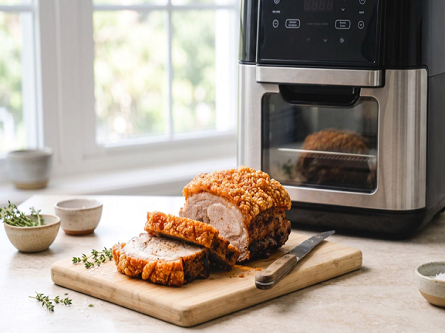
 A pork roast makes an appealing family dinner: tender slices of meat, a browned exterior, and plenty of flavor without a long ingredient list. Traditional oven roasting can take much of the afternoon, especially when you also want crisp crackling.
An air fryer makes a smaller roast more practical. Its compact chamber heats quickly, while moving hot air helps dry and brown the exterior. Choosing a roast that fits and checking the center as it cooks matter more than following one exact time.
Why Pork Roast Works Well in an Air Fryer
An air fryer circulates hot air around several sides of the pork. This helps surface moisture evaporate so the skin can blister and the exposed meat can brown.
The compact chamber is particularly useful for a modest family-sized roast, but airflow still matters. A roast that barely fits may cook through, while areas pressed against the basket remain pale. Leave enough room to lift the pork out easily and let hot air move around it.
Choose a Roast That Fits the Basket
Start with a skin-on pork roast if crisp crackling is the goal. A rindless roast can develop good color, but it will not produce the same brittle, blistered surface.
Measure the air fryer basket before buying the pork. The roast should not touch the heating element or press against the sides. Choosing a slightly smaller piece is better than forcing a large roast into the available space.
Check whether the skin has already been scored. If additional scoring is needed, cut through the skin and into the fat without slicing deeply into the meat. Deep cuts can allow juices to reach the surface and make the crackling harder to achieve.
Dry Skin Makes the Difference
Moisture must evaporate before browning can begin. If the pork enters the air fryer damp, the surface initially steams and may remain chewy after the meat is cooked.
Pat the roast thoroughly with paper towels, including inside the scored lines. When time allows, leave it uncovered in the refrigerator for several hours to dry the surface further.
Before cooking:
* Blot away any visible moisture.
* Rub salt evenly over the skin and into the scored lines.
* Use only a thin coating of oil if the method calls for it.
* Keep marinades and wet seasonings away from the skin.
* Leave open space around the roast in the basket.
Salt helps season the pork and dry the surface, but thick piles can create overly salty areas. Oil should not collect inside the scores. If salt draws moisture to the surface while the roast sits, blot it gently before cooking.
Use Temperature as a Tool
Crisp skin benefits from strong heat, but the air fryer does not need to remain at its highest setting throughout the cook. On a thick roast, the exterior may darken before the center is ready.
A hotter opening stage can help the skin begin to blister. The temperature can then be reduced so the meat finishes more gently. The best settings depend on the shape of the roast and how strongly the air fryer heats.
Cooking time is equally variable. Two roasts of the same weight may finish at different times if one is short and thick while the other is long and narrow.
Begin checking before the suggested cooking time ends. Insert an instant-read thermometer into the thickest part without touching bone or a large pocket of fat. Whole cuts of pork should reach at least 145°F (63°C), followed by a rest of at least three minutes.
Watch the skin as well. If it is deeply browned before the center is ready, lower the heat. If it remains pale while the pork still needs time, continue cooking and monitor it closely.
Keep the Pork Juicy While the Skin Crisps
Good crackling matters less if the pork underneath has dried out. Checking the temperature early is more reliable than waiting for a timer. Opening the basket briefly will not ruin the roast, and it is better to check twice than to overcook it.
For a more detailed method, this guide to air fryer roast pork explains how to balance a juicy center with crisp crackling.
After cooking, transfer the pork to a board or warm plate and let it rest before slicing. Do not wrap it tightly in foil because trapped steam can soften the crackling. If the meat needs covering, tent the sides loosely while leaving the skin exposed.
Easy Sides for a Family Dinner
Pork roast works well with mashed potatoes, crisp potato wedges, roasted carrots, green beans, apple slaw, or a simple salad. If the air fryer is occupied, prepare the sides on the stove or in the oven.
Avoid packing vegetables around the roast. They release moisture and block the airflow needed for crisp skin.
Common Problems with Pork Crackling
Chewy skin usually means the surface was still damp when cooking began. Pale areas may indicate that the roast was touching the basket or receiving uneven airflow.
If the skin browns before the center is ready, lower the temperature and continue checking the meat. Dry pork usually comes from cooking too long, so begin checking early instead of relying on a fixed time.
Crackling that softens during resting has often been trapped under foil. Leave the skin exposed, and keep wet sauces away from it until serving.
A crisp air fryer pork roast does not require a complicated technique. Choose a piece that fits, dry the skin well, and use appearance and internal temperature to decide when it is ready. Serve it after resting, while the crackling is still crisp.