Key Takeaways
- Process art emphasizes the experience of making, not matching a model.
- Open-ended projects give children repeated chances to make decisions and revise ideas.
- Painting, collage, clay, drawing, and sculpture can encourage focus and hands-on exploration.
- Adults can support learning by preparing materials, asking thoughtful questions, and resisting the urge to take over.
- A balanced art program can include both guided crafts and child-directed creative work.
Open-ended art gives children room to explore, make choices, and discover what happens when an idea changes along the way. For families seeking a supportive place to practice these skills, art classes at Jump Into Art Studios in McKinney, Texas, offer hands-on creative experiences, including children’s programs, pottery and clay instruction, sewing, watercolor, camps, and private group activities. Its instructor-led approach and range of materials make the studio a useful local option for children and adults who want to develop skills while creating in a welcoming setting.
At home, in a classroom, or in a community studio, children do not need expensive supplies or a perfect sample to follow. A few well-chosen materials, enough time, and an invitation to experiment can turn art time into meaningful practice in attention, communication, and independent thinking.
What Is Process Art?
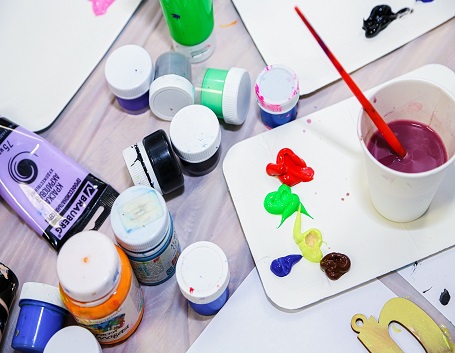
Process art is a choice-driven activity in which children explore materials, test ideas, and respond to what they notice. The finished artwork may be representational, abstract, temporary, or unfinished. What matters is that the child has meaningful control over the experience.
Process art may involve paint, clay, collage materials, printmaking tools, recycled objects, fabric, or natural items. In guidance on using process art with preschoolers, the National Association for the Education of Young Children describes open-ended art as an opportunity for children to express ideas, work through challenges, and engage with others around materials.
Why Process Art Matters
Children often move quickly from one activity to another. Art can provide a different pace. Mixing colors, arranging a collage, building with cardboard, or reshaping clay asks a child to look closely, use their hands, and stay with an idea long enough to see what develops.
Art is not a substitute for reading, science, or math instruction. It can, however, give children practice with habits that appear across many learning settings, including planning, observing, persisting, and changing direction when a first attempt does not work.
Photorealistic editorial studio shot of a child’s hands creating an open-ended collage on a clean white table, surrounded by colorful paper scraps, fabric, yarn, cardboard, child-safe glue, and washable paints; soft controlled lighting, neutral light-gray background, isolated composition, polished commercial feel.
A small 2026 study involving 9 kindergarten children found higher post-activity scores in cognitive flexibility, problem-solving, and behavioral flexibility after a 7-week program combining process art with social interaction. Because the group was small, the findings are best viewed as encouraging rather than conclusive. Still, research on process art and cognitive flexibility strengthens the case for giving children time to create, collaborate, and adapt.
Skills Children Build Through Art
Patience and Focus
Creative work often includes small delays. Paint may need time to dry, a clay shape may collapse, or a child may need several tries to make a pattern. These moments invite children to slow down and remain engaged instead of expecting an immediate result.
Decision-Making
Children decide which colors to combine, where to place a piece of paper, how much glue to use, and whether to add or remove an element. Small choices matter because they help a child form an intention and act on it.
Problem-Solving
A tower made from recycled boxes may fall over. A marker may not create the line a child expected. Rather than treating these outcomes as failures, adults can help children identify the problem and consider an alternative material, method, or design.
Confidence, Independence, and Communication
When a child completes a self-directed project, they can point to choices that are genuinely their own. Group art also creates natural reasons to share tools, explain an idea, ask for help, and listen to a peer’s suggestion.
Process Art Versus Product-Focused Crafts
- Product-focused crafts usually ask children to follow directions and create a recognizable final item.
- Process art begins with materials and an invitation, then allows children to decide where the work goes.
- Guided crafts can help teach a particular technique, sequence, or tool skill.
- Open-ended art gives more space for experimentation, revision, and individual expression.
Both formats can belong in a thoughtful program. The key is to avoid measuring all creative success by whether every child’s project looks alike.
Simple Process-Art Project Ideas
- Texture collage: Set out paper, yarn, foil, fabric scraps, cardboard, leaves, and child-safe glue. Invite children to arrange materials based on texture, color, or a story they want to tell.
- Color-mixing lab: Offer a few washable paints and blank paper. Ask children what new shades they can make and what they observe as colors combine.
- Clay invention: Provide modeling clay and simple tools. Prompt children to build a tiny shelter, an unusual vehicle, a bridge, or a creature.
- Recycled sculpture: Use clean tubes, boxes, lids, and scrap paper to create a robot, neighborhood, machine, or entirely new object.
- Nature printing: Use leaves, bark, stones, or flowers with washable paint to explore shapes, pressure, and repeating patterns.
How Adults Can Offer Helpful Guidance
- Prepare the space. Cover work surfaces and select age-appropriate tools.
- Offer an invitation. Ask, “What could you make with these materials?”
- Wait before solving. Give the child a moment to think through a challenge.
- Ask about the process. Try questions such as, “What did you notice?” or “What might you try next?”
- Recognize effort. Notice persistence, care, planning, and willingness to experiment.
How to Choose a Quality Art Class
When comparing programs, look for age-appropriate materials, a clean and welcoming workspace, instructors who demonstrate without controlling every outcome, and projects that leave room for personal choices. It is also helpful to ask about class size, supplies, schedules, skill levels, and whether the program includes both guided lessons and open-ended exploration.
Common Questions From Parents
Does a child need to be naturally artistic?
No. Art activities can be valuable for discovery and self-expression, whether a child enjoys detailed drawing, bold color, building, or simply exploring materials.
What if a child gets frustrated?
Start by acknowledging the problem. A short break, a new material, or a question about what to try next can help without removing the child’s ownership of the work.
Are messy projects worth it?
They can be managed with washable supplies, smocks, covered surfaces, and a predictable cleanup routine. Sensory materials often make creative exploration more engaging.
A Creative Habit That Grows Over Time
Children do not need elaborate projects to gain something from art. Recycled materials, a few colors, and permission to experiment can be enough. When adults value curiosity and effort over perfection, children have more opportunities to take creative risks, solve problems, and trust their own ideas.