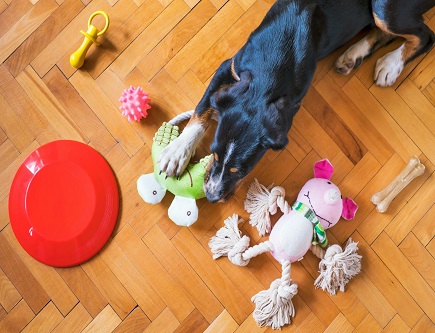
 There are probably a few things around the house that could be turned into something for the dog instead of being thrown away. An old T-shirt. A cardboard box. That rubber mat sitting in the kitchen drawer that nobody is using.
Dogs really don’t need everything to be fancy. Most of the time, they just want something interesting to sniff, chew, chase, or investigate. That makes DIY pet projects a pretty easy weekend activity. They can also be a good way to keep some of the household stuff out of the trash.
Just keep one thing in mind before getting started: dogs are very good at destroying things. Anything homemade needs to be watched the first few times it’s used.
An Easy Feeding Mat
Food and water bowls sliding halfway across the kitchen floor can get annoying. A simple non-slip mat underneath them can fix that. A piece of washable rubber material works well. Cut it a little larger than the bowls and make sure there’re no sharp or rough edges. That’s really all there’s to it. It also gives the food area a little more structure and makes those random bits of spilt food easier to clean.
The food going into the bowls matters too, of course. Once a dog is past the puppy stage, an appropriate adult dog food can be part of keeping its everyday meals suited to its age and activity level. No need to turn the feeding area into a whole project. Sometimes simple is better.
That Old T-Shirt Can Become a Toy
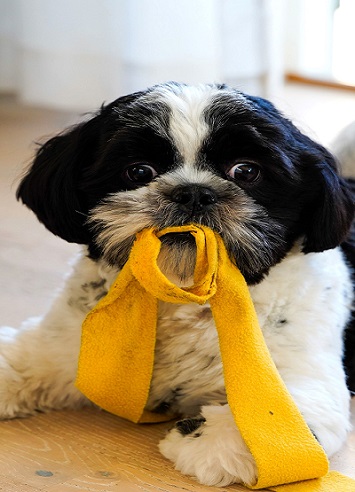
Before throwing out an old cotton T-shirt, cut it into long strips. Take a few strips, braid them together and tie a knot at both ends. Done. It makes a pretty decent tug toy, especially for dogs that like playing with their people rather than just chasing toys around on their own. The only annoying part is that some dogs will immediately decide the goal is to eat the T-shirt. If that happens, the toy isn’t a good choice for that particular dog. Loose threads and pieces of fabric shouldn’t be left around for a dog to swallow.
The American Kennel Club recommends considering a dog’s size and chewing habits when choosing toys, which is worth remembering with homemade ones too.
A Homemade Snuffle Mat
This one takes a little longer, but not much. Get a rubber sink mat with holes and some strips of fleece. Thread the fleece through the holes and tie it off. Keep doing that until the mat is covered. Then hide a few pieces of kibble in it. That’s the game. The dog has to sniff around and figure out where the food is. Some dogs get completely absorbed in this kind of thing. It’s also a nice change from putting food in a bowl and having it disappear in 30 seconds.
Mental stimulation matters for dogs just as much as getting them out for a walk. The RSPCA recommends giving dogs opportunities to use their brains and explore their environment, rather than relying only on physical exercise.
Just don’t go overboard with the treats. If kibble is being used for the game, take it from the dog’s normal daily portion.
Make a Game from a Cardboard Box
This is probably the cheapest idea on the list. Find a clean cardboard box and put a few empty toilet paper tubes inside. Hide little pieces of kibble in some of them. Not all of them. That’s what makes the dog sniff around and figure things out. As the game becomes too easy, change where the food is hidden or add more empty tubes.
The RSPCA has also suggested cardboard boxes and tubes as inexpensive materials for creating simple pet enrichment activities. Avoid boxes with staples, plastic pieces, lots of tape or anything else that could come loose.
A Quick Safety Check
Watch what the dog does with the project. Some dogs will happily play with a fleece toy for months. Others will have it in pieces within ten minutes. A toy that’s safe for one dog may not be safe for another. If pieces are coming off, take it away.
The same goes for homemade treats. Keep portions small and don’t add ingredients just because they happen to be available in the kitchen. Dogs can be surprisingly sensitive to certain foods.
And clean things. Feeding mats, snuffle mats and reusable toys can collect food, saliva and dirt pretty quickly. Washing them regularly keeps the whole idea of a “clean DIY project” from becoming a little pointless.
Use What’s Already Around
The best thing about these projects is that none of them requires a trip to a craft store. An old shirt can become a toy. A rubber mat can become a snuffle mat. A cardboard box can turn into a scent game. A freezer tray can make a quick treat. That’s enough. Dogs don’t really care whether something came from a pet shop or from the kitchen cupboard. What matters is whether it gives them something safe and interesting to do.
And sometimes a dog being busy with a homemade toy for twenty minutes is more useful than another expensive toy that gets ignored five minutes after opening the package.