A holster wrap has a practical role beyond improving the appearance of carry equipment. Its fabric, coating, adhesive, and cut can influence how well the covered holster handles friction, moisture, and regular contact with clothing or gear. A reliable holster wrap material therefore supports both surface protection and consistent performance.
For example, a Cordura holster wrap option can provide a rugged outer layer when it uses durable textile and secure adhesive backing. Holster wrap quality also affects how smoothly the covering follows curved surfaces and how long the finish stays intact. The sections below explain how abrasion resistance, weather shielding, color retention, bonding strength, and contour fit shape the value of a holster covering.
Abrasion-Resistant Holster Wrap Fabric Protects the Shell
Daily carry creates repeated contact between the holster, belt, clothing, storage cases, and nearby equipment. A high-denier holster wrap fabric can resist scuffs, small tears, and edge fraying better than a light decorative covering. This added textile layer helps protect the underlying polymer or Kydex holster shell from visible surface marks.
A dense weave also gives the covering a more structured finish. The fabric remains less likely to lose its shape around high-contact areas. Buyers should therefore review textile weight, weave consistency, and edge construction before comparing patterns or colors.
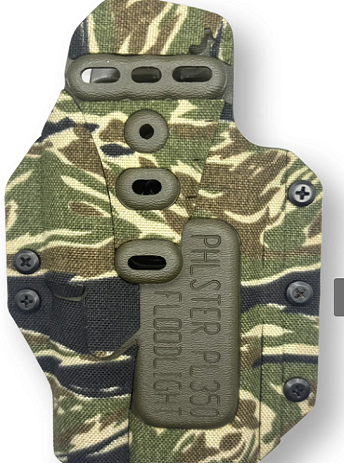
Weather-Resistant Wraps Limit Moisture Exposure
Sweat, humidity, and light rain can reach a holster through routine outdoor or daily use. Quality holster wrap fabrics may include a polyurethane coating that helps repel surface moisture. This feature reduces the amount of water that settles into the textile layer covering the shell.
Useful moisture-related qualities include:
* A coated surface that resists light water contact
* Dense fibers that do not absorb moisture quickly
* Clean wrap edges that remain firmly attached
* Even fabric coverage across exposed shell sections
* A finish suited to regular field conditions
These details help the outer layer maintain a cleaner surface. They also make the covered holster more suitable for changing environments.
Color Retention Preserves the Holster Wrap Finish
A holster wrap may lose visual appeal if its pattern fades quickly under sunlight. Higher-quality textiles offer better resistance to UV exposure, which helps camouflage designs and solid colors retain their intended appearance. This quality matters for covered holsters used outdoors or stored in areas with regular light exposure.
Consistent color also reflects dependable material construction. Uneven fading can make covered sections appear worn before the fabric reaches the end of its useful life. A stable finish therefore supports both appearance and long-term value.
Strong Adhesion Keeps the Wrap Secure
The adhesive layer determines how securely the holster wrap remains attached to the shell. For instance, a Cordura holster wrap or another comparable textile option should use strong bonding material that limits peeling, bubbling, or shifting around the edges. Secure adhesion also helps the covered holster maintain a smooth and professional profile.
Buyers should check for:
* Firm attachment around corners and narrow sections
* Flat fabric coverage without trapped air pockets
* Stable edges near frequent contact points
* Consistent bonding across curved shell areas
* Minimal added thickness around functional components
A reliable bond keeps the covering in its intended position. It also reduces the chance of loose fabric sections affecting regular handling.
Contour Fit Preserves Holster Function
Holsters contain curves, hardware openings, retention points, and carefully shaped access areas. Quality holster wrap material should conform smoothly around these sections without bunching or covering functional components. Precise cutting and suitable flexibility create a close, low-profile fit across the shell. A well-fitted covering also helps preserve clean access to adjustment points and essential holster features.
Choosing the right supplier is essential when purchasing holster wrap material. A dependable source should provide clear fabric specifications, accurate compatibility details, precise cutting, and reliable adhesive construction. Buyers should also review product descriptions carefully to confirm that the covering matches the intended holster model and use. The right supplier makes it easier to select a well-constructed wrap that offers consistent quality and a professional finish.