Table of Contents
- Proper Watering Techniques
- Mulching Benefits
- Pruning Guidelines
- Soil Health Management
- Pest and Disease Control
- Protecting Trees from Urban Stressors
- Community Involvement
- Conclusion
St. Charles, MO, with its charming neighborhoods and vibrant parks, relies on healthy urban trees to enhance public spaces, improve property values, and create a cleaner, cooler community. However, keeping city trees thriving requires more than hope and occasional attention. Consistent implementation of best practices is vital to ensure they withstand the unique climate and urban stressors present in this part of Missouri. If an urgent issue arises, such as damage after a storm, residents can rely on emergency tree service in St. Charles, MO for prompt and professional help.
Each year, urban trees in St. Charles face threats from heat, pollution, and limited growing space, conditions that demand a proactive approach from homeowners, property managers, and city officials alike. Taking these challenges seriously helps facilitate healthy growth and fortify tree canopies against both natural and human-caused pressures. Local stewardship is essential in preserving the green legacy for future generations in St. Charles.
Proper Watering Techniques
Water is often the most critical resource for healthy urban trees in St. Charles, especially during the region’s dry summer months. Newly planted trees need deep, slow watering to encourage roots to extend deeper into the soil, making them more drought resistant. Try giving new trees 10 to 15 gallons per week. Mature trees can thrive with 8 to 10 gallons weekly, delivered slowly and directly to the root zone for maximum absorption. Setting up soaker hoses or watering bags helps ensure moisture reaches where it’s needed most.
Mulching Benefits
Applying mulch is one of the simplest and most effective ways to protect tree roots in the city. In St. Charles, organic mulch, such as wood chips or shredded leaves, helps conserve moisture, supports beneficial soil organisms, and acts as insulation against the region’s variable temperatures. Spread two to four inches of mulch in a wide ring around the base, but keep it a few inches away from the trunk. This prevents excessive moisture and discourages rodents and insects that could damage trees. Mulch also helps reduce competition from turf grass and weeds, creating a more stable growing environment.
Pruning Guidelines
Pruning is not just about aesthetics but is a crucial aspect of tree health and safety. In St. Charles, late winter or early spring is the ideal time to prune local species. This timing helps minimize stress and reduces the risk of pest or disease transmission. Start by removing any dead, damaged, or diseased branches. Focus on small cuts and aim to preserve the tree’s natural shape. Pruning should be done methodically, working from the bottom of the canopy up and from the outer branches in. Never remove more than one-quarter of the tree’s living wood in a single season.
Soil Health Management
Urban soils in St. Charles are often compacted or depleted, posing a challenge for healthy root systems. Testing the soil annually for pH and nutrient levels provides a solid baseline for any amendments. Adding organic matter, like compost or leaf mold, builds fertility and enhances the soil structure, promoting stronger root growth and resilience. Avoid heavy equipment or excessive foot traffic near trees, as soil compaction significantly limits oxygen, water absorption, and root expansion. If needed, aeration with specialized tools can help rejuvenate compacted areas.
Pest and Disease Control
St. Charles urban trees are susceptible to several pests and diseases unique to Missouri’s climate. Regular inspections for signs of wilting, leaf spots, or unusual growths can catch issues early, before they spread. For example, anthracnose, a fungal infection, often targets sycamore and maple trees, thriving in periods of cool, wet spring weather. Remove fallen and infected leaves, improve airflow by selective pruning, and irrigate trees at ground level to reduce disease spread. Missouri’s urban trees also attract pests like bagworms and borers, so employ integrated pest management (IPM) methods and consult local extension offices for identification and control strategies. The USDA Forest Service offers expert resources and guidelines on urban tree health.
Protecting Trees from Urban Stressors
St. Charles’ urban trees routinely face challenges such as compacted roots from foot traffic, soil pollution, salt damage from winter road treatments, and physical injuries from construction. Installing tree guards or protective fencing can prevent mower and vehicle damage. When planting new trees, provide enough space for canopy and root growth, and choose locations with good sunlight and low risk of soil contamination. Regularly clear debris from the base of trees and monitor for signs of heat or drought stress, especially during Missouri’s hot summers.
Community Involvement
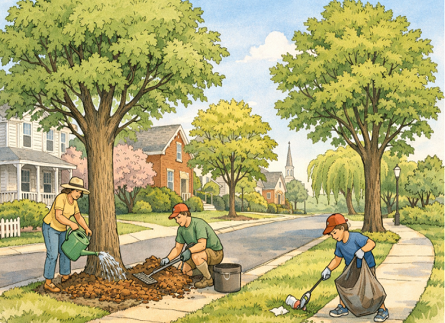
Community engagement is key to long-term urban tree health in St. Charles. Residents can participate in local tree-planting days, adopt trees in public spaces, and attend workshops on tree care. Neighborhood associations and schools can team up with city foresters for educational programs, fostering a sense of stewardship. Volunteers are often needed both for hands-on care and for spreading awareness of the value that a robust urban tree canopy brings to everyone in St. Charles. For ideas on how to get involved in local tree stewardship projects, visit Tree City USA’s resource center.
Conclusion
Healthy urban trees are a crucial asset for St. Charles, Missouri, providing shade, cleaner air, and natural beauty. With best practices like deep watering, organic mulching, strategic pruning, proactive soil management, vigilant pest and disease monitoring, and community participation, the trees of St. Charles can continue to flourish. By working together and supporting citywide tree health, every resident helps create a greener, more resilient community for generations to come.