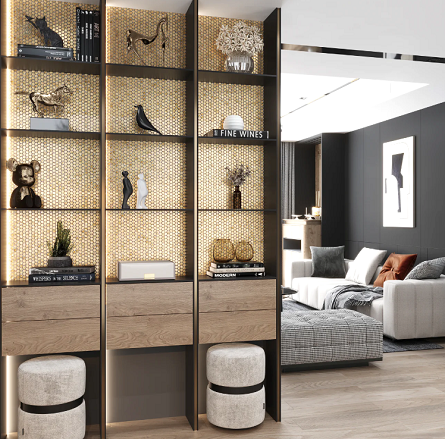
 Circular tile layouts have been around for centuries. They can be found in antique train stations, Roman bathhouses, and even the opulent hotel lobbies of 19th-century Europe. Today, these tile designs have made their way into residential spaces, and for good reason. Circular tile layouts introduce movement and softness to a space when used as flooring or wall decor, creating a visual structure that standard grid patterns or straight lines simply cannot achieve.
To create elegant circular tile layouts, it takes more than just selecting a lovely pattern. The grout choice, tile format, and installation techniques all impact the overall flow of a circular tile layout design. This article discusses tile formats that work well in circular layouts, what makes them aesthetically pleasing, and design and installation tips you need to know to install them correctly.
Tile Formats That Work Well in Circular Layouts
Penny tiles are one of the most practical formats for circular layouts. The small, spherical shape doesn’t need to be cut because it naturally follows curves. The distance between individual penny tiles is already set because they are usually available on sheets with a mesh backing.
This makes floor and wall installations simpler and easier to manage. Penny tiles can be used in many areas as they come in a variety of materials, including porcelain, ceramic, glass, and natural stone.
Small-format mosaic tiles function similarly. Small mosaics under 2 inches perform well in circular layouts because the grout between tiles helps create the geometric look, regardless of whether you’re utilizing square, rectangular, or irregular patterns. The smaller your tiles are the better the curves tend to look.
Hexagon tiles don’t create a true circle, but they can still be used to make circular tile patterns if they’re organized in a floral or round design. Hexagon tiles have flat sides that produce a faceted circle that works well in Art Deco-inspired designs.
Where Tile Circular Layouts Work Best
Entryways and foyers are the traditional home for medallion layouts. These spaces are the perfect canvas because they provide excellent visibility upon entering a home. By directing the gaze down and across the floor rather than directly to the wall, a circular medallion in the middle of a foyer also visually expands the small areas.
Bathroom floors also benefit from circular layouts. Especially if the room dimensions are small, a medallion can anchor the entire floor without looking oversized. Penny tile is a great choice for bathroom floors because it also creates added slip resistance due to grout lines found in small pattern.
Kitchen backsplashes are suitable for circular layouts as they can serve as focal points. When centered behind the range or main prep area, a curved fan or circular layout can become a practical kitchen backsplash and frame the cooking space beautifully, similar to how a painting frames a wall.
Outdoor patios and pool surrounds are well-suited to circular tile layouts, especially when defining seating zones, marking the perimeter of a swimming pool design, or designing water features. In a way that’s both functional and visually distinctive, porcelain and natural stone circular tile formats work well outdoors given their durability.
How Installation Actually Works
To get a circular tile layout right, the first step is to find and mark the center point of the design. This is often the middle of the surface area you’re tiling, or the main sightline from the entrance of a room. Unlike in standard tiling, you should start installation at the center and work outward. This keeps the focal point neat and avoids any awkward cuts at the edges of your tiles.
If your layout involves many cuts around fixtures or other architectural features, tiles must be dry-laid first. Then labeled, and then installed. This preparation helps form a final pattern that looks clean and professional.
Conclusion
Compared to a regular grid, circular tile layouts may require a little more planning, but that’s exactly what makes them so rewarding. The installation is more hands-on, and the final appearance is greatly influenced by features like grout, scale, and tile format you choose. When done right, the outcome feels attractive and timeless for many years to come.
Formats like penny tile make the installation process far easier for smaller-scale circular layouts without compromising the final look. Taking the time to understand layout flow, focal points, and how curved geometry is read visually is what ultimately separates an average installation from one that looks totally professional.
In the end, circular tile layouts are less about complexity and more about intention, and they can also contribute to creating a more comfortable and efficient home when thoughtfully designed.