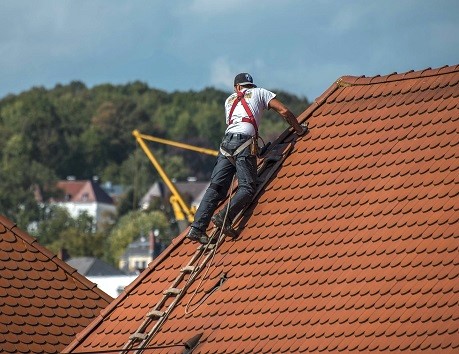
 Finding a puddle on your floor or a brown stain on your ceiling is frustrating enough, but the real headache starts when you realize the source isn’t directly above the mess. Water is sneaky. It doesn’t always take the most obvious path from the outside world into your living room. If you are dealing with a mystery leak, calling a roof repair tooele contractor can help you track down the culprit before the damage spreads. Gravity and physics work together to move moisture through your home in ways that feel almost calculated.
The Path of Least Resistance
Water is lazy. It will always take the easiest route possible to get where it wants to go. In a home, that usually means following the lines of your framing or the slope of your pipes. When a shingle fails or a vent pipe seal cracks, the water drops onto the plywood decking or a support beam. Instead of falling straight down, it clings to the wood and “walks” along the length of the board.
This is why you might see a drip in the middle of your kitchen, even though the actual hole in the roof is twenty feet away over the garage. The water hits a rafter and slides down the incline until it hits a joint or a knot in the wood. Only then does it gain enough weight to let go and fall onto your ceiling drywall.
Capillary Action and Surface Tension
Surface tension is a powerful force that allows water to defy gravity for short distances. If two materials are pressed closely together, like two overlapping shingles or a piece of flashing against a brick wall, water can actually be sucked upward or sideways through the tiny gap. This is called capillary action.
It works a lot like a sponge soaking up a spill. The water gets pulled into narrow spaces and can travel horizontally across your roof deck or behind your siding. Once it finds a seam in the insulation or a gap in the vapor barrier, it enters the wall cavity. By the time it shows up as a soft spot on your baseboards, it has traveled through layers of material that hide its true origin.
Wind and Pressure Changes
Sometimes the weather itself forces water to travel further than it naturally would. During a heavy storm, high winds can blow rain upward under the overlaps of your roofing material. This is common with metal roofs or clay tiles that aren’t perfectly sealed.
Air pressure also plays a huge role. If the air pressure inside your attic is lower than the pressure outside, it can actually suck moisture through tiny pinholes in your building envelope. This “vacuum effect” pulls water deep into the structure of the house. Without that pressure difference, the water might have just rolled off the side of the building, but instead, it gets pulled deep into your rafters.
Condensation and Secondary Paths
Not every “leak” is a direct line from a hole in the roof. Sometimes, a small entry point allows humid air to get into a cool space. This leads to condensation forming on cold surfaces like copper pipes or AC ducts. The water beads up on these long metal runs and travels the entire length of the house before dripping off.
In these cases, the “entry point” is just a tiny gap that lets air in, but the water damage appears far away because the pipe acted like a highway. You might spend hours looking for a hole in the roof directly above the leak, but the real issue is a lack of ventilation or a small gap in the siding on the opposite side of the home.
The Role of Plumbing and Gravity
While roof leaks get most of the blame, internal plumbing is a frequent offender for traveling water. For instance, a slow leak in a second-floor bathroom can follow the outside of a PVC drain pipe all the way down to the basement.
Because the pipe is smooth, the water stays attached to it through surface tension. It only drops off when the pipe turns a corner or passes through a floor joist. This creates a trail of moisture that can span multiple stories, making the “original entry point” incredibly difficult to spot without opening up the walls.
Final Word
Ignoring a small spot on the ceiling is a gamble because you never truly know how far that water has traveled or what it has touched along the way. Tracking the moisture back to the start requires patience and a good eye for how your home is built. If you find yourself stuck, reaching out to a professional roof repair tooele contractor is the best way to stop the travel and protect your investment. Addressing the root cause today prevents a massive restoration project tomorrow.