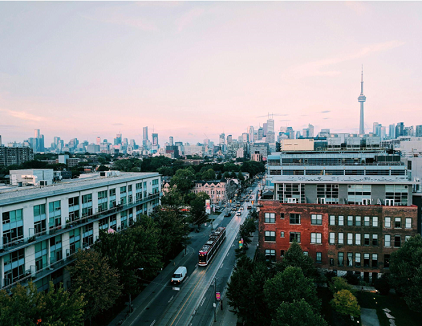
 Toronto has a way of pulling people in. Some come for work. Some come for schools. Some come because they think a city this large must eventually reveal the perfect place to settle if they search long enough. The truth is simpler. Certain neighbourhoods consistently rise to the top because they balance lifestyle, safety, education, convenience, and that rare feeling of being anchored in a city that never stops moving.
People do not choose neighbourhoods at random. They choose them because the day to day realities make sense. Commutes are manageable. Schools are strong. Parks are maintained. Streets feel lived in, not crowded. The community works. And people stay.
Here is the honest look at the best areas to live in Toronto, why they keep attracting families, and what these neighbourhoods reveal about how people want to live now.
The Real Reason Certain Neighbourhoods Stand Out
Cities change quickly. Toronto especially. Towers go up. Businesses close and reopen. Streets evolve. But the neighbourhoods people consistently rank as the most desirable have one thing in common: stability.
Stability looks like:
* schools that outperform
* walkable streets
* predictable property values
* long term residents
* low turnover
* well maintained parks
* access to daily essentials without effort
People like to pretend they want excitement, but they choose stability every time. These neighbourhoods offer it.
Midtown
Midtown often gets overshadowed by downtown’s energy and uptown’s space, but it sits in the sweet spot where families can live without feeling fenced in.
Neighbourhoods like Davisville Village, Mount Pleasant, Yonge and Eglinton, and Chaplin Estate work because they balance convenience and calm. You get access to transit, shops, bakeries, playgrounds, and schools without feeling like you live in a business district.
The appeal is not glamorous. It is practical. Life is easier here. Everything you need is within a short radius. You can get across the city quickly. Streets feel friendly without being overcrowded. Homes appreciate steadily.
Midtown is the reliable choice. People move here for function. They stay because it rarely disappoints.
The Beaches
Anyone who says Toronto does not have a beach community has not spent time in The Beaches. The area feels like a neighborhood that forgot it was part of a major city. People walk dogs at sunrise. Families crowd the boardwalk in summer. Volleyball games fill the sand. Small shops thrive.
It feels relaxed, but not remote. There are strong schools, stable home values, and a predictable pace of life. It gives the illusion of escape without leaving the city.
This neighbourhood works for people who want quiet streets, lake views, and a sense of insulation. Homes here rarely last long on the market because the lifestyle is specific and consistently appealing.
Leslieville
Leslieville started as the alternative choice for people who thought downtown living looked interesting but unsustainable. Now it is a full family district. Strollers everywhere. Cafes that serve oat milk without rolling their eyes. Local businesses with actual personality. Small roads that feel lived in, not manufactured.
The appeal has shifted over time. What began as an artistic east end pocket became the go to neighbourhood for young families who want character, community, and walkability without the density of downtown.
It is not trendy anymore. It is functional. Home values have shown that repeatedly.
High Park and Bloor West
High Park is the neighbourhood people choose when they want nature without paying cottage prices. Bloor West Village is the neighbourhood people choose when they want community without sacrificing access.
The two combined create a lifestyle that feels complete. Large parks. Strong schools. Quiet residential streets. Independent shops. Transit access. A sense of steadiness that most urban neighbourhoods lose over time.
Families gravitate here because the area has rhythm. Morning routines feel easier. Weekends feel predictable in a good way. Life feels less frantic.
Leaside
If stability had a postal code, it would be Leaside. Homes hold value. Schools rank consistently high. Streets feel calm. Neighbours stay for decades. It is one of the neighbourhoods where families move in with long term intent, not a temporary plan.
There is no chaos here. No uncertainty. Just a quiet confidence that the neighbourhood works for the people who choose it.
Rosedale and Moore Park
People like to call Rosedale “exclusive,” but the more accurate word is “insulated.” It is quiet in a way few city neighbourhoods are allowed to be. There is minimal traffic. Streets are tree lined and curved. Homes sit back from the road. Noise disappears.
Moore Park is the same. Calm. Green. Surrounded by ravines that create natural boundaries. Both neighbourhoods have strong schools, strong architecture, and long term residents who rarely leave.
These communities attract buyers who want privacy without isolation. The appeal is subtle and often misunderstood. It is not about showing off. It is about disappearing into a neighbourhood that functions at its own pace.
Lawrence Park
Lawrence Park is one of the city’s original planned residential communities. It feels curated. Homes are well built. Streets are cohesive. The neighbourhood is consistent in both look and feel.
People choose Lawrence Park because it offers the structure of a traditional, established neighbourhood with the quiet confidence of a place that will hold its value over time.
There is order here. And order is surprisingly rare in modern cities.
Etobicoke’s Gems
Etobicoke has pockets that outperform expectation. Kingsway. Sunnylea. Humber Valley Village. These neighbourhoods function like small towns inside the city.
You get:
* strong schools
* quiet streets
* mature trees
* family oriented layouts
* homes with actual space
* access to parks and trails
* reasonable commutes
These neighbourhoods represent the kind of calm that people think they need to leave Toronto to find. But it exists here, just without the downtown noise.