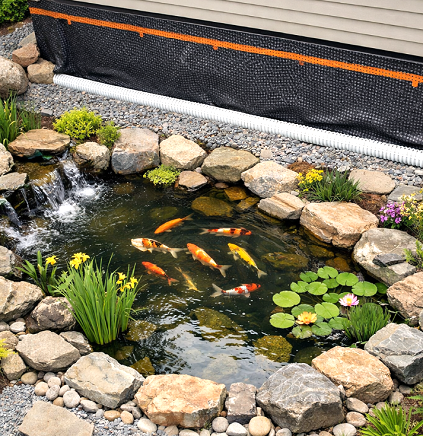
 Installing a beautiful koi pond or waterfall feature in your backyard is like adding a permanent vacation spot to your property. But here’s something most pond enthusiasts don’t consider until it’s too late: all that gorgeous water you’ve carefully positioned in your landscape can wreak havoc on your foundation if you haven’t invested in proper basement waterproofing. The relationship between outdoor water features and indoor moisture problems is more connected than most homeowners realize, and getting basement waterproofing done before you build that dream pond saves massive headaches down the road. Think of your foundation as the hull of a ship. It needs to be watertight whether you’re sailing through rainstorms or deliberately parking next to an ocean of your own creation.
Ontario’s clay-heavy soil already creates enough moisture challenges without adding thousands of gallons of water sitting just meters from your foundation walls. When pond owners skip the critical step of ensuring their basement is properly protected, they’re essentially playing Russian roulette with their home’s structural integrity. The hidden dangers of foundation water damage become exponentially more likely when water features enter the equation, creating pressure situations that standard foundations weren’t designed to handle. Understanding waterproofing tactics for a leak-free basement becomes essential knowledge for anyone serious about maintaining both their aquatic feature and their home’s foundation simultaneously.
The Water Feature Paradox Nobody Warns You About
Here’s the irony: you spend thousands creating a stunning pond that adds tranquility and value to your outdoor space, then discover your basement walls are weeping like they’ve watched a sad movie. The water table shifts. Soil saturation increases. Hydrostatic pressure builds against foundation walls that were barely managing before you added 2,000 gallons of pond water ten feet away.
This isn’t about pond liners failing or water escaping from your feature, though that certainly doesn’t help if it happens. This is about the cumulative effect of maintaining high soil moisture levels in proximity to your foundation. Every time you top up your pond, every rainfall that increases water volume, every bit of overflow contributes to an environment where water seeks the path of least resistance, and that path often leads straight to your basement.
Understanding the Moisture Migration Pattern
Water is like that houseguest who doesn’t understand boundaries. It goes everywhere it’s not wanted, especially when Ontario’s freeze-thaw cycles get involved. Clay soil expands when wet and contracts when dry, creating movement that puts stress on foundation walls. Add a pond to this equation, and you’ve increased the wet-dry cycling dramatically.
The ground around your pond stays consistently moist, which sounds ideal for maintaining stable water levels in your feature. But that moisture migrates through soil layers, following gradients and finding weak points in your foundation’s exterior. Without proper waterproofing membranes, drainage systems, and moisture barriers, your basement becomes the collection point for all this wandering water.
Timing Matters: Waterproofing Before or After?
Ideally, foundation waterproofing happens before you install your pond. This allows contractors to work without worrying about disturbing your carefully balanced aquatic ecosystem. Equipment can access all sides of your property without navigating around water features, plants, or decorative elements.
However, many pond owners discover the waterproofing necessity after their feature is already established. This complicates things but doesn’t make it impossible. Experienced waterproofing teams can work around existing ponds, though it requires more planning and potentially some temporary adjustments to water levels or access points.
The Drainage System Integration
Smart pond installation includes coordination between your water feature’s drainage and your home’s foundation drainage. These systems shouldn’t compete or interfere with each other. Proper waterproofing often involves installing or upgrading weeping tile systems that collect and redirect groundwater away from your foundation.
When pond overflow systems, yard drainage, and foundation waterproofing all work together, you create a comprehensive water management strategy. Your pond stays full, your yard stays beautiful, and your basement stays dry. It’s the trifecta every water feature enthusiast should aim for.
Signs Your Pond Is Affecting Your Foundation
Watch for these warning signals: musty basement odors that appear after pond installation, increased humidity levels indoors, efflorescence (white mineral deposits) on basement walls, or cracks that seem to align with your pond’s location. These symptoms suggest water from your feature’s general area is finding its way to your foundation.
Don’t ignore subtle changes. That slight dampness that only appears after heavy rain might seem manageable until it becomes standing water. The small crack that looks harmless can become a major breach when water pressure increases. Early intervention through comprehensive waterproofing prevents catastrophic failures that threaten both your home and your beloved pond.
The Investment Protection Angle
Consider this: a quality pond installation in Ontario runs anywhere from $5,000 to $50,000 depending on size and complexity. Foundation repairs from water damage? Easily $10,000 to $30,000 or more. Preventive waterproofing typically costs $3,000 to $8,000 for most residential properties.
The math is straightforward. Protecting your foundation investment costs less than fixing it later, and it ensures your pond remains a source of joy rather than regret. Comprehensive waterproofing also increases your home’s resale value, appealing to buyers who appreciate both the aesthetic appeal of water features and the practical reality of a dry, protected basement.
Creating Your Water Feature Sanctuary Responsibly
Ponds and water features represent one of the most rewarding home improvements possible. The sound of running water, the flash of koi swimming beneath lily pads, the way outdoor spaces transform into living art installations. These benefits deserve protection through responsible foundation care.
Coordinate with both pond specialists and waterproofing experts during your planning phase. Discuss soil conditions, water table levels, property grading, and drainage patterns. This integrated approach ensures your backyard oasis enhances your property without creating expensive consequences underground.