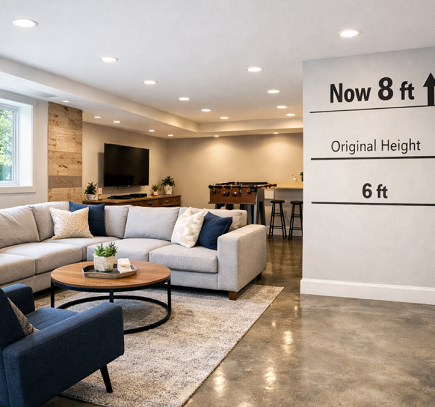
 That basement you’ve been using as a glorified storage locker for Christmas decorations and boxes labeled “maybe someday”? It could be so much more. The secret to transforming that low-ceiling dungeon into actual livable space lies in basement underpinning, a process that literally elevates your home’s possibilities. When homeowners consider basement underpinning, they’re not just gaining a few extra inches of headroom. They’re unlocking square footage that can rival the comfort and functionality of main-floor living areas. Think of it as giving your home a growth spurt, except instead of awkward teenage years, you get immediate returns in both living space and property value.
Toronto’s real estate market makes expanding outward nearly impossible for most homeowners, which is why smart families are looking downward instead. The vertical space beneath your feet represents untapped potential that costs significantly less than building additions or moving to a bigger house. How basement underpinning creates high-end basement spaces showcases remarkable transformations that turn forgotten areas into showpiece rooms. Meanwhile, the architectural implications extend far beyond simple renovations, as basement underpinning creates architectural gold by reimagining how homes utilize their complete footprint.
The Height Dilemma Most Homeowners Face
Here’s the uncomfortable truth: most older basements have ceiling heights that make you feel like you’re living in a hobbit hole. Anything under seven feet feels cramped, and good luck getting building permits for finished living spaces that don’t meet modern height requirements. You’re stuck with a space that’s technically there but practically useless for anything beyond storing old furniture and hosting spiders.
Underpinning solves this by lowering the basement floor, excavating beneath your existing foundation, and reinforcing everything with new concrete and support systems. It’s like performing surgery on your house, giving it the structural equivalent of better posture. The result? A basement with proper ceiling height that actually feels like part of your home rather than an afterthought.
Beyond Just Headroom: The Complete Transformation
The real magic happens when you combine increased height with modern finishing. Suddenly, that dingy basement becomes a legitimate master suite, home office, rental unit, or entertainment space. Natural light becomes possible with proper egress windows. Plumbing upgrades allow for full bathrooms. The entire dynamic of your home shifts when you gain 600-1000 square feet of genuinely usable living area.
For growing families, this eliminates the constant space crunch without the massive expense and disruption of moving. Teenagers get their own domain. Home offices separate work from living areas. In-law suites provide multi-generational housing solutions. The flexibility is remarkable once you’re not fighting against oppressively low ceilings.
The Investment Reality Check
Let’s address the elephant in the room: underpinning isn’t cheap. However, comparing costs reveals interesting math. Moving to a larger home involves real estate fees, land transfer taxes, moving expenses, and potential mortgage increases that easily exceed six figures. Building an addition requires permits, foundation work, roofing, and often loses yard space that makes your property less appealing.
Underpinning costs fall somewhere between these options while delivering square footage that immediately increases your home’s market value. Most homeowners recoup 70-85% of their investment in increased property valuation, and in hot markets, sometimes more. You’re essentially buying space at wholesale prices compared to purchasing a bigger house.
The Rental Income Angle
Creating a legal basement apartment generates ongoing revenue that transforms underpinning from an expense into an investment vehicle. In the GTA, where rental demand remains insane, a well-finished basement suite can generate $1,800-$2,500 monthly. That’s mortgage-offsetting income that pays back your underpinning investment within a few years while continuing to generate returns indefinitely.
Timing and Project Management
Underpinning projects typically span 4-8 weeks depending on complexity and scope. Yes, it’s disruptive. You’ll deal with excavation equipment, concrete trucks, and construction noise. But compare this to months of house hunting, packing, moving, and settling into a new neighborhood. The temporary inconvenience delivers permanent results without uprooting your entire life.
Smart homeowners schedule these projects during seasons when being displaced matters less. Summer months mean kids can play outside during noisy work hours. Good weather keeps projects on schedule without rain delays that stretch timelines and budgets.
The Building Code Advantage
Modern underpinning brings your basement up to current building codes, which actually opens doors for future renovations. Once you’ve got proper ceiling height, adequate egress, and updated structural support, finishing the space becomes straightforward. Permits get approved more easily. Insurance companies look more favorably on properly upgraded foundations. You’re setting up your home for long-term flexibility.
The reality is that basements represent the last frontier for urban home expansion. When you can’t build out and building up requires major structural changes, going down makes practical sense. Underpinning transforms wasted space into your home’s secret weapon, delivering square footage that performs exactly like main-floor living areas without the premium price tag.