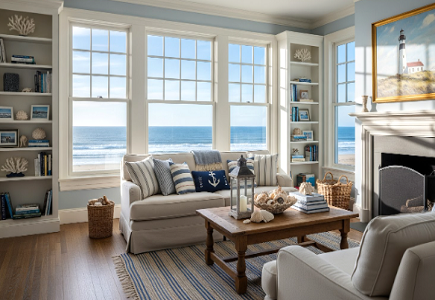
 A property by the sea offers a serene lifestyle, but it also has distinct practical requirements. Careful decisions that shield your house from the weather while letting you take in the scenery are essential for comfort in this type of environment. Knowing your surroundings and building a home that works with them rather than against them is essential to living effectively on the coast.
Your Transparent Shield
Windows play an important role in the coastal lifestyle. Persistent salt air and strong winds in places like Ayr may wreak havoc on typical residential glass and window frames. Seals may get corroded by salt, and wet, chilly air can enter through thin glazing. Choose marine-grade aluminium or specifically treated uPVC frames to keep your house dry and warm. To minimise heat loss, select windows with good thermal efficiency, such as robust double glazing in Ayr. For resistance to typical wind pressure, make sure all opening sections have strong multi-point locks.
The Unseen Envelope
Your windows’ supporting structure is also crucial. The walls, roof, and foundations of a structure should all work together as a cohesive, well-insulated system. Not just in the winter, but throughout the year, adequate insulation is essential. It minimises condensation, a major problem in coastal buildings, and helps control indoor temperatures. Installing an appropriate moisture barrier beneath external cladding helps prevent damp conditions, while controlled ventilation is crucial. Your house should be built to efficiently control humidity while maintaining airtightness when necessary.
Materials That Remember Where They Are
The seaside environment should be taken into consideration while selecting any materials for the house. Exterior paints and stains need to be designed to withstand fading and blistering brought on by exposure to sunlight and salt. To prevent quick corrosion, hardware like hinges, handles, and handrails should be marine quality. Because they help control indoor moisture, breathable materials like lime-based plaster work better inside than regular gypsum board. Select flooring materials like porcelain tile or engineered wood that are resistant to moisture and sand.
Designing for the Light
Glare and fading may result from the bright and reflective nature of coastal light. The secret to designing comfortable spaces is controlling natural light. To manage sunlight, use elements like deep roof overhangs, exterior shutters, or adjustable awnings. To avoid early wear, choose paint for your home and textiles with high UV protection. Practical and layered window treatments are ideal, such as sheer blinds to disperse daylight and blackout liners for peaceful sleep.
Creating Sound Sanctuary
While the ocean’s sound is enjoyable, constant noise can become tiring. High-performance windows help reduce this, but additional steps can make interiors quieter. Adding extra plasterboard or acoustic insulation to interior walls can significantly lower noise levels. Soft furnishings, heavier curtains, and thick rugs also absorb sound, helping create a calm indoor environment even during strong winds or rough seas.
Practical Outdoor Spaces
Outdoor areas should be designed to function well in coastal conditions. Select furniture made from materials that resist salt and moisture, such as powder-coated aluminium, teak, or synthetic wicker. Decking and patio surfaces should be slip-resistant when wet. Include sheltered spaces, such as covered pergolas or recessed seating areas, so you can spend time outside comfortably without being exposed to harsh wind or spray.
A Mind for Maintenance
Living by the coast necessitates constant maintenance. Comfort and durability are preserved with routine maintenance. To get rid of salt accumulation, rinse external surfaces regularly with fresh water. Inspect seals, hardware, and metal fixtures frequently for signs of wear. Choose straightforward, long-lasting exterior finishes to simplify routine maintenance. Regular maintenance guarantees that your house will remain safe and comfortable over time.
It takes careful planning and regular maintenance to live peacefully by the ocean. You can create a home that is resilient to its surroundings and provides long-lasting comfort and peace by starting with the correct materials, systems, and safety features.