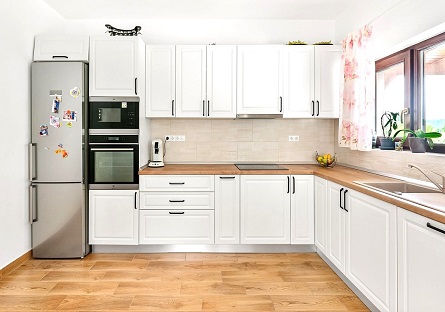
 Contractors in 2025 focus on cabinet styles that balance function, durability, and design appeal. Homeowners want kitchens that feel both modern and timeless, so professionals lean toward styles that fit many layouts and color schemes. The most popular kitchen cabinet styles among contractors in 2025 combine clean lines, natural textures, and flexible finishes that suit a wide range of projects.
As design trends shift toward simplicity and warmth, contractors pay close attention to what materials, colors, and details clients request most. They look for cabinet options that deliver long-term value while keeping the space stylish and easy to maintain. This balance between beauty and practicality shapes which cabinet styles lead the market this year.
Shaker Cabinets – versatile and timeless with a recessed center panel
Shaker cabinets remain one of the most requested styles among contractors in 2025. Their clean lines and recessed center panel create a simple, balanced look that fits both modern and traditional kitchens. The five-piece door design adds quiet detail without appearing ornate.
Contractors value Shaker cabinets for their flexibility in design and material choices. They work well with solid wood, MDF, or plywood, allowing builders to meet different budget levels without losing quality. Neutral colors such as white, gray, and navy continue to dominate, while darker tones like espresso add depth to luxury homes.
Many professionals who source kitchen cabinets for contractors choose Shaker styles because they appeal to a wide range of clients. Their timeless look suits remodels, new builds, and rental properties alike. As a result, Shaker cabinets remain a dependable option for projects that demand both durability and lasting visual appeal.
Slab Cabinets – minimalist flat-panel style popular for modern kitchens
Slab cabinets, also called flat-panel cabinets, feature smooth, unframed doors that create a clean and simple look. Their design removes extra details like grooves or molding, which gives kitchens a sleek and uncluttered feel. Contractors often recommend them for spaces that aim for a modern or contemporary style.
These cabinets work well with many materials, including wood veneer, laminate, and painted finishes. As a result, they fit both high-end and budget-friendly projects. Their flat surface also makes them easier to wipe down, which appeals to homeowners who want low-maintenance kitchens.
Contractors value slab cabinets because they pair easily with modern hardware and minimalist layouts. The design helps highlight other features, such as countertops or backsplashes, instead of competing for attention. Therefore, they remain a steady favorite for projects that balance function and visual simplicity.
Raised-Panel Cabinets – traditional elegance with detailed edges
Raised-panel cabinets remain a favorite among contractors who value timeless design. They feature a center panel that sits higher than the surrounding frame, creating a sense of depth and texture. This classic look fits well in homes that lean toward traditional or rustic styles.
The detailed edges and molded frames give these cabinets a refined appearance. Contractors often choose them for kitchens that aim to feel warm and inviting without appearing outdated. The craftsmanship involved adds character and visual interest to the space.
Many homeowners appreciate that raised-panel cabinets work with both stained wood and painted finishes. As a result, they can adapt to different color schemes and materials. Their popularity continues in 2025 because they balance durability with a familiar, elegant look that appeals to a wide range of tastes.
Fluted Cabinets – textured design trending in custom kitchens
Fluted cabinets have become a standout feature in 2025 kitchen designs. Contractors note that homeowners appreciate their subtle texture and depth, which add visual interest without overpowering a space. The vertical grooves create a rhythmic pattern that fits both modern and traditional layouts.
Many designers favor this style because it balances craftsmanship with simplicity. The fluted surface reflects light in soft ways, which helps kitchens feel warm and layered. In addition, it pairs well with natural materials such as wood, stone, and matte finishes.
Contractors also value fluted cabinets for their versatility. They can appear on full cabinet fronts, island bases, or even accent panels. As a result, this design adapts easily to different budgets and layouts while maintaining a refined look that feels current yet timeless.
Two-Tone Cabinets – combining colors for visual interest
Two-tone cabinets remain a favorite among contractors in 2025 because they create depth and contrast without major remodeling. This style uses two different colors or finishes on upper and lower cabinets to make the kitchen feel balanced and modern.
Contractors often pair light upper cabinets with darker bases to draw the eye and make the space appear larger. White and navy, sage green and oak, or gray and natural wood are common combinations that appeal to homeowners who want a fresh but timeless look.
This design also allows flexibility. Homeowners can highlight a kitchen island or specific section with a different tone for subtle separation. As a result, the kitchen feels more personalized and visually organized.
Contractors appreciate that two-tone designs fit a range of budgets and styles. Whether the home leans traditional or contemporary, the color contrast adds interest while keeping the overall design simple and functional.
Conclusion
Contractors in 2025 continue to favor cabinet styles that balance function, durability, and clean design. Natural wood tones, matte finishes, and simple lines dominate projects because they fit both modern and traditional kitchens.
Homeowners value materials that last and colors that create a calm, timeless look. Therefore, contractors often recommend neutral palettes and sustainable woods to meet these expectations.
As a result, the most popular cabinet choices reflect a shift toward practical beauty rather than short-term trends. This focus on quality and usability defines how professionals approach kitchen design in 2025.