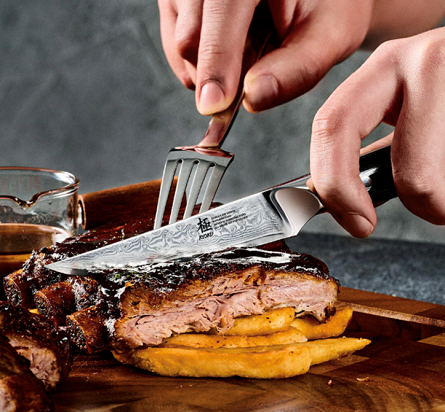
 There’s nothing quite like sitting down to a perfectly cooked steak—crispy on the outside, tender and juicy on the inside. But here’s the catch: if your steak knife is dull or poorly designed, that first bite can turn into a frustrating sawing match. The right steak knife doesn’t just make cutting easier—it preserves the texture of the meat and enhances the entire dining experience.
Why Steak Knives Matter
Imagine carving into a medium-rare filet mignon only to shred it apart instead of slicing cleanly. A sharp, well-balanced steak knife ensures each cut is smooth, keeping the juices locked inside and the presentation intact. Beyond function, steak knives also add elegance to the table—making them an essential tool for both everyday meals and special occasions.
Types of Steak Knives
Not all steak knives are the same, and the type you choose can change how you enjoy your meal:
* Serrated knives
With saw-like teeth, serrated blades glide through crusty exteriors (think grilled steaks or charred edges). They don’t need frequent sharpening, but they can tear softer cuts.
* Straight-edge knives
Perfect for precision, these blades make clean, smooth cuts that keep steaks juicy. The tradeoff? They require more regular sharpening.
* Granton-edge knives
Recognizable by the small dimples along the blade, these reduce friction and prevent meat from sticking. They’re often favored in professional kitchens.
Each type has its place, and some steak lovers keep a mix for different cuts and cooking styles.
Key Features to Look For
When shopping for steak knives, keep these essentials in mind:
* Blade material: Stainless steel is durable and resists rust, while high-carbon steel offers razor-sharp precision but requires more upkeep.
* Handle comfort: Choose from wood for a classic look, resin for durability, or metal for sleek modern style. Comfort and grip matter just as much as looks.
* Balance and weight: A well-balanced knife feels natural in your hand and cuts with less effort.
* Design and aesthetics: From rustic wood handles to polished chrome finishes, your knives should complement your tableware and reflect your style.
Caring for Your Steak Knives
Good steak knives can last for decades if you treat them well. A few simple habits go a long way:
* Cleaning: Hand wash and dry immediately. Dishwashers can dull blades and damage handles.
* Storage: Use a knife block, magnetic strip, or individual sheaths to protect the blades.
* Sharpening: Serrated knives rarely need sharpening, but when they do, a professional service works best. Straight-edge blades can be honed at home with a sharpening stone or rod.
Choosing the Right Set for You
Think about how often you’ll use your knives and what matters most to you:
* Daily use: Look for sturdy, dishwasher-safe stainless steel sets that can handle frequent meals.
* Entertaining guests: Invest in a stylish set that adds flair to the dinner table.
* Gifting: A high-quality knife set makes a thoughtful present for weddings, housewarmings, or food lovers.
If you’re looking for a balance of performance and elegance, Kyoku’s Japanese steak knives are a great choice. Crafted with precision and inspired by traditional Japanese blade-making, they offer razor-sharp edges and comfortable handles that make every cut effortless. Whether you’re slicing through a weeknight sirloin or plating steaks for a dinner party, Kyoku knives deliver both style and durability.
Extra Tips for the Perfect Steak Experience
Steak knives are just part of the equation. Here are a few ways to elevate your next meal:
* Use hard-surfaced plates—they’re kinder on your blades than soft ceramic or porcelain.
* Serve with care: plating your steak attractively makes the dining experience more enjoyable.
* Brush up on table etiquette: hold your knife with a relaxed grip and cut with smooth, confident strokes.
Conclusion
A great steak deserves a great knife. With the right set, you’ll slice through each bite effortlessly, keeping the flavors and juices intact. Plus, a well-chosen steak knife adds polish to your table and makes every meal—from casual dinners to special celebrations—feel like a treat.