The Changing Landscape of Energy
The global energy industry is undergoing a major shift as demand increases for cleaner, more dependable solutions. Fossil fuels are gradually being replaced by renewable and low-emission technologies aimed at decreasing environmental impact while satisfying growing energy requirements. Innovations in solar, wind, hydrogen, and carbon capture are pushing this transition forward, emphasizing the need for flexibility and adaptability in addressing climate challenges. These varied strategies underscore the importance of a diverse and resilient energy future.
Among the companies leading this movement, Bloom Energy has gained attention for its innovative fuel cell technology that provides clean, efficient, and dependable power. Offering scalable solutions helps industries and communities transition toward lower-carbon operations. Such advancements underscore how technological ingenuity is reshaping energy use worldwide.
Recent Breakthroughs in Clean Power
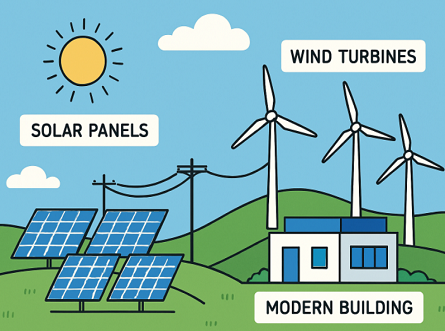
The clean energy field is seeing rapid breakthroughs. Solar technology continues to surge with the development of perovskite cells that exceed traditional silicon in efficiency and adaptability. Offshore wind is also expanding, with larger, more efficient turbines that can generate power in previously inaccessible locations. Companies are scaling up hydrogen electrolysis and maturing fuel cell technology, both viable for decarbonizing industries and transportation. Breakthroughs in geothermal and advanced nuclear, such as small modular reactors, are further diversifying clean energy portfolios.
The Role of Energy Storage and Microgrids
As more renewable energy comes online, advanced storage technologies are increasingly important. Lithium-ion batteries remain dominant, but flow and hydrogen-based solutions are gaining traction due to their scalability and longevity. Storage allows renewable energy sources like wind and solar to provide round-the-clock power, smoothing out the variability of supply and reinforcing grid stability. Microgrids, which can operate independently or in tandem with traditional grids, are revolutionizing energy access and resilience—deployable in cities and remote settings for uninterrupted power during emergencies.
Economic and Social Benefits of Cleaner Energy
The benefits of cleaner energy extend far beyond environmental gains. The renewable sector has become a powerful jobs engine, employing millions in fields ranging from research and manufacturing to installation and system maintenance. Investments in clean technologies are reducing household and business costs over time. Furthermore, renewable energy adoption has a tangible impact on public health. Air and water quality improvements reduce disease and create stronger, more vibrant communities.
Global Collaboration and Policy Support
International cooperation is integral to building a cleaner energy future. Efforts like the Paris Agreement establish global targets, but the true progress happens through local and national initiatives that provide regulatory certainty and financial incentives. Governments, private sector players, and research institutions must work hand-in-hand, sharing best practices and fostering innovation. Public-private partnerships and regional alliances are emerging as catalysts for large-scale transition projects, helping to align technological breakthroughs with real-world deployment.
Practical Steps for Individuals and Organizations
* Evaluate energy usage and seek opportunities for efficiency improvements through audits or smart technology upgrades.
* Install rooftop solar panels, support community wind projects, or choose green energy providers if available.
* Switch to energy-efficient lighting and appliances to minimize unnecessary energy consumption.
* Advocate for pro-renewables policies at the local and regional level, and get involved in community clean energy initiatives.
* Educate others about clean energy’s environmental and economic benefits via online content, workshops, and community outreach.
Preparing for Future Trends in Clean Energy
The clean energy revolution is only just beginning. Artificial intelligence and advanced grid management are set to optimize power flows and enable greater integration of renewables. “Sector coupling”—the interconnection of electricity with heating, cooling, and mobility—will create holistic, efficient systems. Scalable, affordable storage will be key, as will digitalization and real-time data management to ensure responsiveness and resilience. Keeping pace with the latest policy changes, technologies, and market trends will empower individuals and organizations to play an active role in building a sustainable, prosperous future.