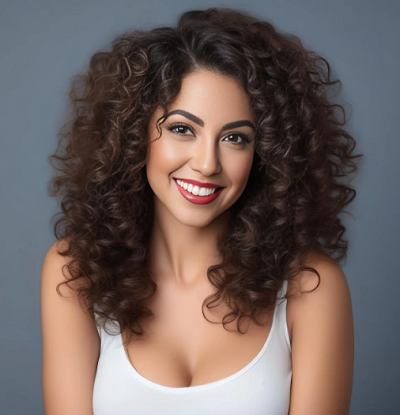
 Curly hair can be both a blessing and a challenge. Many people with natural curls struggle to manage their locks effectively, often making common mistakes that lead to frizz, dryness, and damage. Understanding these errors and learning how to correct them can transform unruly curls into gorgeous, healthy ringlets.
Proper curl care starts with recognizing your unique curl pattern and tailoring your routine accordingly. From using the wrong products to over-manipulating your hair, simple missteps can have a significant impact on the health and appearance of your curls. By avoiding these pitfalls and adopting curl-friendly practices, you can enhance your natural texture and embrace your beautiful curls.
One key aspect of curly hair care is maintaining adequate moisture. Many curly-haired individuals unknowingly strip their hair of essential oils, leading to dryness and breakage. Using nourishing care products, such as hair growth conditioner can help replenish moisture and promote healthier, stronger curls.
Key Takeaways
* Identifying your curl pattern is crucial for effective hair care
* Maintaining proper moisture balance prevents frizz and damage
* Using the right products and techniques enhances natural curl definition
Understanding Curly Hair Fundamentals
Curly hair has unique characteristics that require special care and attention. Proper maintenance involves recognizing curl patterns, managing moisture levels, and choosing suitable products.
Identifying Your Curl Pattern
Curl patterns range from loose waves to tight coils. Type 2 hair has S-shaped waves, Type 3 has defined curls, and Type 4 has tightly coiled spirals. Each type has subtypes (A, B, C) based on curl tightness.
Knowing your curl pattern helps in selecting appropriate products and styling techniques. To determine your type, observe your hair when wet and dry. Consider factors like strand thickness and density.
Curl patterns can vary on different parts of the head. Some people may have a mix of patterns, requiring customized care for each section.
The Science of Moisture and Curly Hair
Curly hair is naturally drier than straight hair due to its structure. The spiral shape makes it harder for natural oils to travel down the hair shaft, leading to potential dryness and frizz.
Moisture is crucial for maintaining healthy curls. It helps define curl patterns, reduces frizz, and prevents breakage. Hydration comes from both water and products that lock in moisture.
Deep conditioning treatments once a week can significantly improve curl health. These treatments penetrate the hair shaft, providing intense nourishment and improving elasticity.
Selecting the Right Haircare Products
Choosing appropriate products is essential for curly hair care. Sulfate-free shampoos are gentler and help retain natural oils. Silicone-free conditioners prevent product buildup that can weigh down curls.
Leave-in conditioners and styling creams help maintain moisture throughout the day. Gels and mousses can enhance curl definition and hold.
Natural oils like coconut, argan, and jojoba can be beneficial for some curl types. However, they should be used sparingly to avoid weighing down the hair.
Product effectiveness varies based on individual curl patterns and porosity. Experimentation is key to finding the right combination for optimal curl health and appearance.
Practical Tips for Everyday Curly Hair Care
Maintaining healthy, beautiful curls requires a tailored approach to cleansing, styling, and protection. The right techniques can transform frizzy, lifeless hair into bouncy, defined curls.
Effective Cleansing and Conditioning
Choose sulfate-free shampoos to prevent stripping natural oils from curly hair. Co-washing with a cleansing conditioner can be beneficial for dry, coarse textures. Limit washing to 2-3 times a week to avoid dryness.
Deep condition weekly to combat dryness and improve elasticity. Apply conditioner from mid-length to ends, using fingers to detangle gently. Leave-in conditioners provide extra moisture and help define curl patterns.
For added hydration, try the “squish to condish” method: scrunch conditioner into soaking wet hair, then rinse partially for soft, defined curls.
Detangling and Styling Techniques
Always detangle curly hair when wet and saturated with conditioner. Use a wide-tooth comb or fingers to work through knots from ends to roots. This minimizes breakage and preserves curl formation.
Apply styling products to soaking wet hair in sections. Scrunch or use the “praying hands” method to distribute product evenly. A curl cream or gel can enhance definition and control frizz.
Avoid heat styling when possible. If using a blow dryer, attach a diffuser and dry on low heat. Apply a heat protectant to prevent damage. Air-drying preserves curl integrity and reduces frizz.
Protecting Your Hair While You Sleep
Preserve curls overnight by using a silk or satin pillowcase. These smooth fabrics reduce friction, preventing frizz and breakage. Alternatively, wrap hair in a silk or satin scarf or bonnet.
For longer hair, try the “pineapple” method: gather curls loosely at the crown and secure with a soft scrunchie. This protects curl shape and adds volume at the roots.
Refresh curls in the morning by misting with water and scrunching in a leave-in conditioner. This revives definition without the need for daily washing.
Conclusion
Caring for curly hair requires knowledge and the right techniques. By avoiding common mistakes like over-washing, using harsh products, or improper drying methods, curly-haired individuals can enhance their natural texture. Embracing moisture, gentle handling, and curl-specific products are key steps to achieving healthy, defined curls. With patience and the right approach, anyone can learn to love and manage their curly locks effectively.